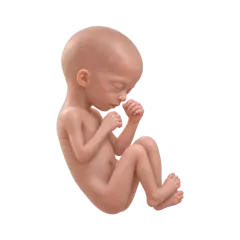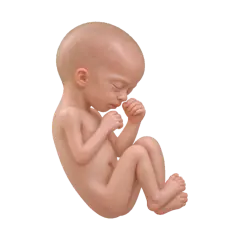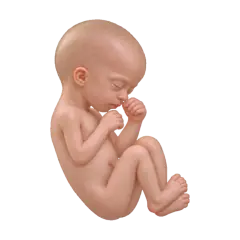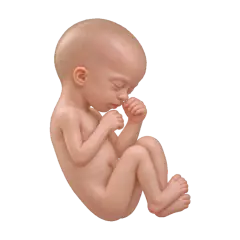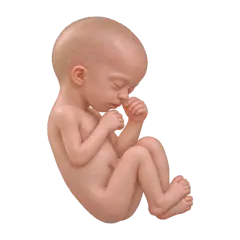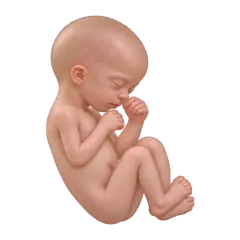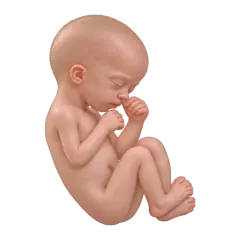
First trimester, week 6
6 weeks pregnant: A flicker on the screen
- Size of a
- Lentil

- Length
- ≈ 6 mm crown to rump
- Weight
- < 1 g
- Heart rate
- 100–120 bpm typical range
- Due date
- 238 days away 15% of the way
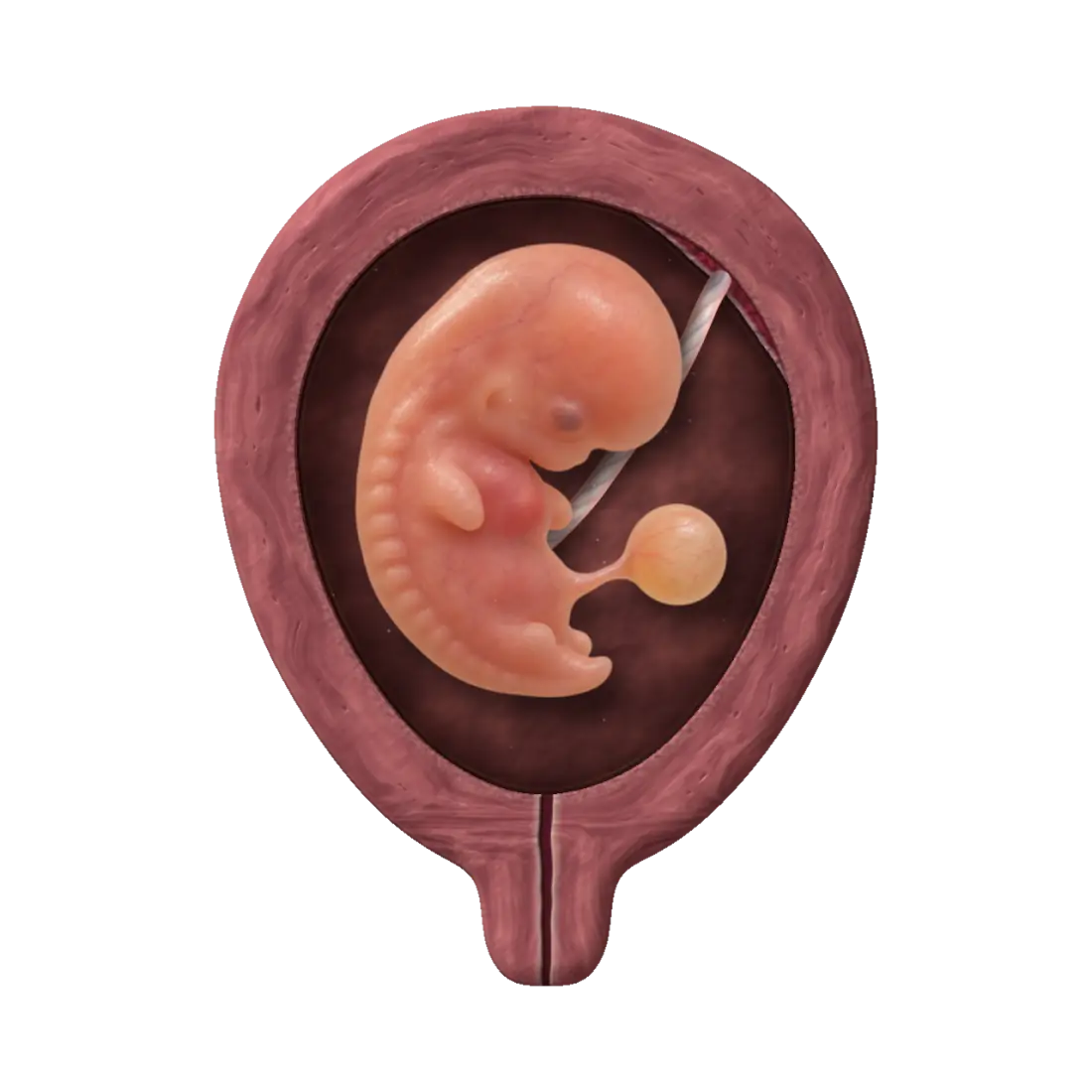
At 6 weeks pregnant, your baby is about the size of a lentil: roughly 6 mm from crown to rump, weighing less than 1 g. You’re in your first trimester, with about 34 weeks to go until your due date.
Your baby this week
- The heartbeat can often be seen as a flicker on a transvaginal ultrasound, at roughly 100–120 beats per minute.
- Tiny buds appear that will grow into arms and, a few days later, legs.
- Dark spots mark where the eyes will form. Small pits on the sides of the head will become the ears.
Your body this week
- Nausea and vomiting often start or strengthen now. About 7 in 10 pregnant people get some.
- Smells may feel overpowering, and some foods you loved can suddenly feel impossible to eat.
- Mood swings are common because hormones are rising fast.
- Typical weight gain so far
- 0.2–0.8 kg
- Your uterus
- About the size of a pear (unchanged to the eye)
Weight gain range is for a pre-pregnancy BMI of 18.5–24.9 (IOM guideline). Your provider may advise differently.
Morning sickness at 6 weeks: what helps
Despite the name, nausea and vomiting can happen at any time of day. The NHS says they usually improve or stop somewhere between weeks 12 and 20. In one study, about half of women had relief by 14 weeks and 90% by 22 weeks.
Things that may help include plenty of rest, avoiding smells and foods that set you off, eating something plain like dry toast or a cracker before you get up, and having small, plain meals often. Sipping drinks little and often tends to work better than large amounts at once.
There is some evidence for ginger and for acupressure wristbands. Check with a pharmacist before taking ginger supplements. If these steps aren’t enough, a doctor can prescribe anti-sickness medicine, often an antihistamine, that is suitable in pregnancy, so it’s worth asking rather than struggling on.
When sickness at 6 weeks is more serious
Severe pregnancy sickness is called hyperemesis gravidarum. It is much worse than ordinary morning sickness and can cause dehydration and weight loss. It affects around 1 to 3 in every 100 pregnancies, and it is treatable.
Contact your midwife or doctor if you can’t keep food or fluids down for 24 hours, your pee is very dark or you haven’t peed for more than 8 hours, you feel very weak, dizzy or faint on standing, you have tummy pain or a high temperature, you’re losing weight, or you vomit blood.
What if you have no symptoms at 6 weeks?
Symptoms vary a lot between people and between pregnancies, so having few of them doesn’t by itself mean something is wrong. Read what the evidence says about having no symptoms.
If you are given a scan at this stage, the heartbeat can often be seen as a flicker on an internal (transvaginal) scan. Seeing it is reassuring. Not seeing it yet can simply mean your dates are a little out, so you’ll usually be offered a repeat scan before any conclusions are drawn.
Scans, tests and checkups
-
This weekFirst prenatal visit & bloodwork Checkup
Health history, blood pressure, urine, blood type and Rh factor, blood count, and infection screening (hepatitis B, HIV, syphilis, rubella immunity). The UK aims to see you by 10 weeks.
-
This weekEarly / dating ultrasound Ultrasound
Confirms the pregnancy is in the uterus, sees the heartbeat, counts babies and dates the pregnancy. Often part of the first visit or combined with the 12-week scan.
-
From week 10NIPT (cell-free DNA blood test) Blood test
A blood test that screens for Down syndrome (trisomy 21), trisomies 18 and 13, and can report sex chromosomes. It is a screening test. A high-chance result is confirmed with CVS or amniocentesis.
Baby’s sex: Sex from ~10 weeks, typically >98–99% accurate
-
From week 10CVS (chorionic villus sampling) Diagnostic
Diagnostic test on a tiny placenta sample, offered after a high-chance screening result or known family condition. The NHS gives the miscarriage risk as less than 1 in 200 for most pregnancies. The UK usually does it at 11–14 weeks.
Baby’s sex: Diagnostic, only done for medical reasons
Real size, next to an adult hand
Growth curve
When to call your midwife or doctor at 6 weeks
Call your midwife, doctor or maternity unit straight away, day or night, if you have any of these:
- Vaginal bleeding, with or without cramps.
- Strong pain low on one side of your belly, pain at the tip of your shoulder, or feeling faint. These can be signs of an ectopic pregnancy, which needs urgent care.
- Being sick so often that you can’t keep fluids down for a day.
- Fever of 38 °C (100.4 °F) or higher, or pain or burning when you pee.
- Pain or swelling in one leg, chest pain, or sudden shortness of breath. These can be signs of a blood clot.
- Feeling very low, hopeless or anxious most days. If you feel you might harm yourself, get emergency help.
Based on NHS and ACOG guidance. This list isn’t complete. If something feels wrong, call anyway. In an emergency, call your local emergency number.
Tip for this week
If you cannot keep fluids down for 24 hours, or you feel dizzy and are peeing very little, contact your provider. Severe sickness (hyperemesis gravidarum) is treatable.
Myth or fact?
Does bad morning sickness mean you’re having a girl?
Partly trueThere’s a small statistical link between severe sickness and girls, but it can’t predict the sex of any one baby.
Read the evidenceCommon questions at this stage
More myths around week 6
Questions people ask about week 6
Can you hear the heartbeat at 6 weeks?
You can usually see it as a flicker on a transvaginal ultrasound. You generally cannot hear it with a handheld Doppler until about 10–12 weeks.
What does the baby look like at 6 weeks?
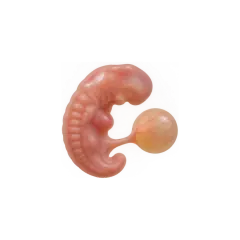
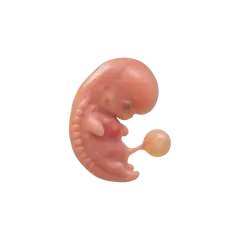
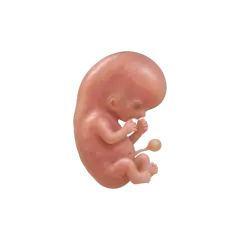
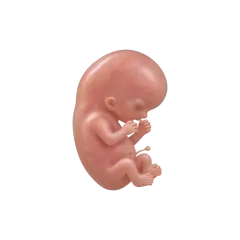
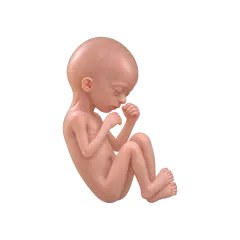
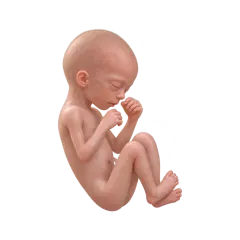
A curved, C-shaped embryo about 4–6 mm long, with a large head end, a tail and tiny limb buds. It is floating in a fluid-filled sac with the yolk sac nearby.
References
- NHS Best Start in Life: 6 weeks pregnant
- NHS: Vomiting and morning sickness
- NHS: Severe vomiting in pregnancy
- Lacroix R et al. Nausea and vomiting during pregnancy: a prospective study. American Journal of Obstetrics & Gynecology, 2000
- NHS: Your antenatal appointments
- NHS: Ectopic pregnancy
- NHS: Miscarriage
- MedlinePlus (US National Library of Medicine): Fetal development
Advice differs between countries, so follow your own care team’s plan. Weights from week 20 are the WHO median, and earlier weights are approximate. How we check this.
All 40 weeks
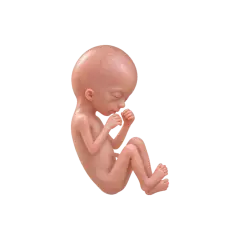
First trimester Weeks 1–13
From conception to a fully formed, tiny fetus. The most rapid change of the whole pregnancy.
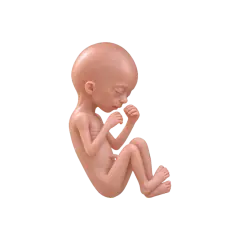
Second trimester Weeks 14–27
Growth, movement and senses. Often the most comfortable stretch for parents.

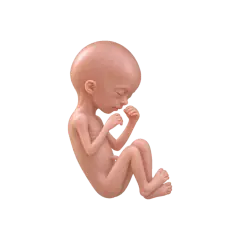
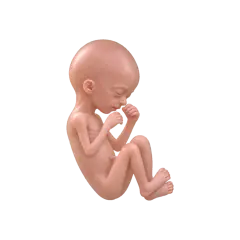




Third trimester Weeks 28–40
Weight gain, brain and lung maturation, and getting into position for birth.