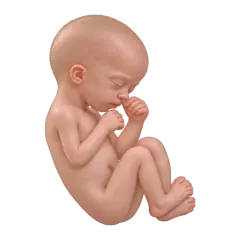
Third trimester: weeks 28 to 40
The home stretch. Your baby roughly triples in weight, gets into position, and you start preparing for birth.
When is the third trimester?
From 28 weeks 0 days until birth. Most babies are born between 37 and 42 weeks.
How your baby develops
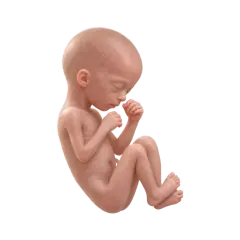
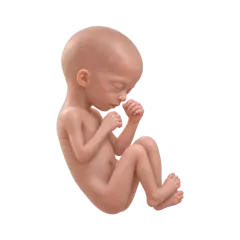
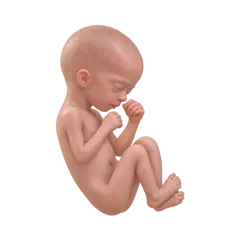
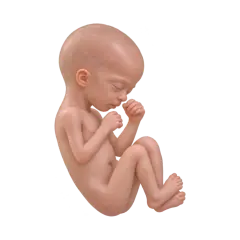
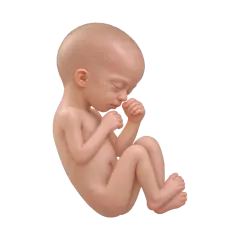
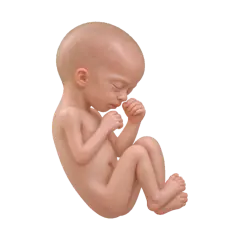
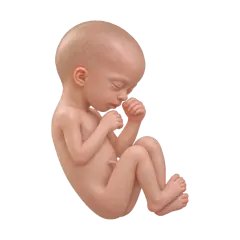
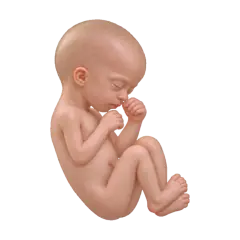
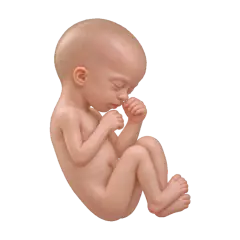
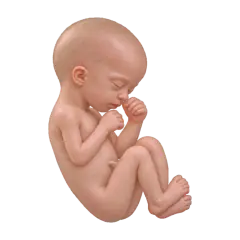
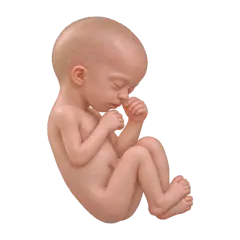
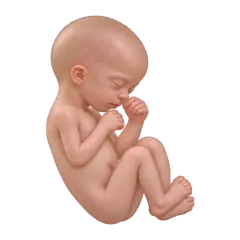
Your baby grows from about 37.6 cm and 1.2 kg at week 28 to about 51.2 cm and 3.6 kg at week 40. Healthy babies vary a lot.
The eyelids reopen at about week 28, and by about weeks 31 to 34 the bones are fully developed but still soft. Most babies are head-down by the start of labour.
Sleep and tiredness
Tiredness often comes back as the extra weight and bigger bump make sleep harder. Feeling tired won’t harm you or your baby.
From 28 weeks, go to sleep on your side, left or right. Going to sleep on your back is linked with a higher risk of stillbirth, though the overall risk is low. If you wake up on your back, just turn over.
Keep noticing movements
Your baby should keep moving in their usual pattern right up to and during labour. It’s a myth that babies move less at the end. If movements slow down, stop or change, call your maternity unit immediately, even at night.
Appointments and vaccines
In the UK, appointments are usually at 28, 34, 36, 38 and 40 weeks, plus 31 weeks for a first baby and 41 weeks if needed. At 28 weeks you’ll have a blood test, and an anti-D injection if your baby is at risk of rhesus disease.
The NHS offers the RSV vaccine from 28 weeks. In the US it’s given at 32 to 36 weeks during RSV season. Your baby’s position is checked at about 36 weeks, and turning a breech baby may be offered.
Getting ready for labour
The main signs are regular contractions, a “show”, backache, an urge to go to the toilet, and your waters breaking. See when to call. If you’re still pregnant near your due date, you may be offered a membrane sweep, and induction is offered if labour hasn’t started by about 41 weeks.
When to get help
Call your midwife, doctor or maternity unit straight away, day or night, if you have any of these:
- A change in your baby’s usual pattern of movement. Call straight away rather than waiting until the next day.
- Vaginal bleeding, or a gush or steady trickle of fluid.
- Severe belly pain that doesn’t go away.
- A severe headache, vision changes, pain under your ribs, or sudden swelling of your face, hands or feet. These can be signs of pre-eclampsia.
- Regular tightenings, period-like cramps or lower back pressure that keep coming. This could be early labour.
- Intense itching, especially on your hands and feet, which can be a sign of a liver condition called cholestasis.
- Fever of 38 °C (100.4 °F) or higher, or pain or burning when you pee.
- Pain or swelling in one leg, chest pain, or sudden shortness of breath. These can be signs of a blood clot.
- Feeling very low, hopeless or anxious most days. If you feel you might harm yourself, get emergency help.
Based on NHS and ACOG guidance. This list isn’t complete. If something feels wrong, call anyway. In an emergency, call your local emergency number.
References
- NHS Best Start in Life: Week-by-week guide, third trimester
- Kiserud T et al. The WHO Fetal Growth Charts. PLoS Medicine, 2017
- NHS: Tiredness and sleep problems in pregnancy
- NHS: Reducing the risk of stillbirth
- Cronin RS et al. Maternal going-to-sleep position and late stillbirth: individual participant data meta-analysis. EClinicalMedicine, 2019
- NHS: Your baby’s movements
- NHS: Your antenatal appointments
- NHS: Vaccinations in pregnancy
- CDC: Immunizations to protect infants from RSV
- NHS: If your baby is breech
- NHS: Signs that labour has begun
- NHS: Inducing labour
- NHS: Pre-eclampsia
- NHS: Itching and intrahepatic cholestasis of pregnancy
- MedlinePlus (US National Library of Medicine): Fetal development
- Tommy’s: Pregnancy due date calculator
Advice differs between countries, so follow your own care team’s plan. How we check this.
Third trimester, week by week
Third trimester Weeks 28–40
Weight gain, brain and lung maturation, and getting into position for birth.