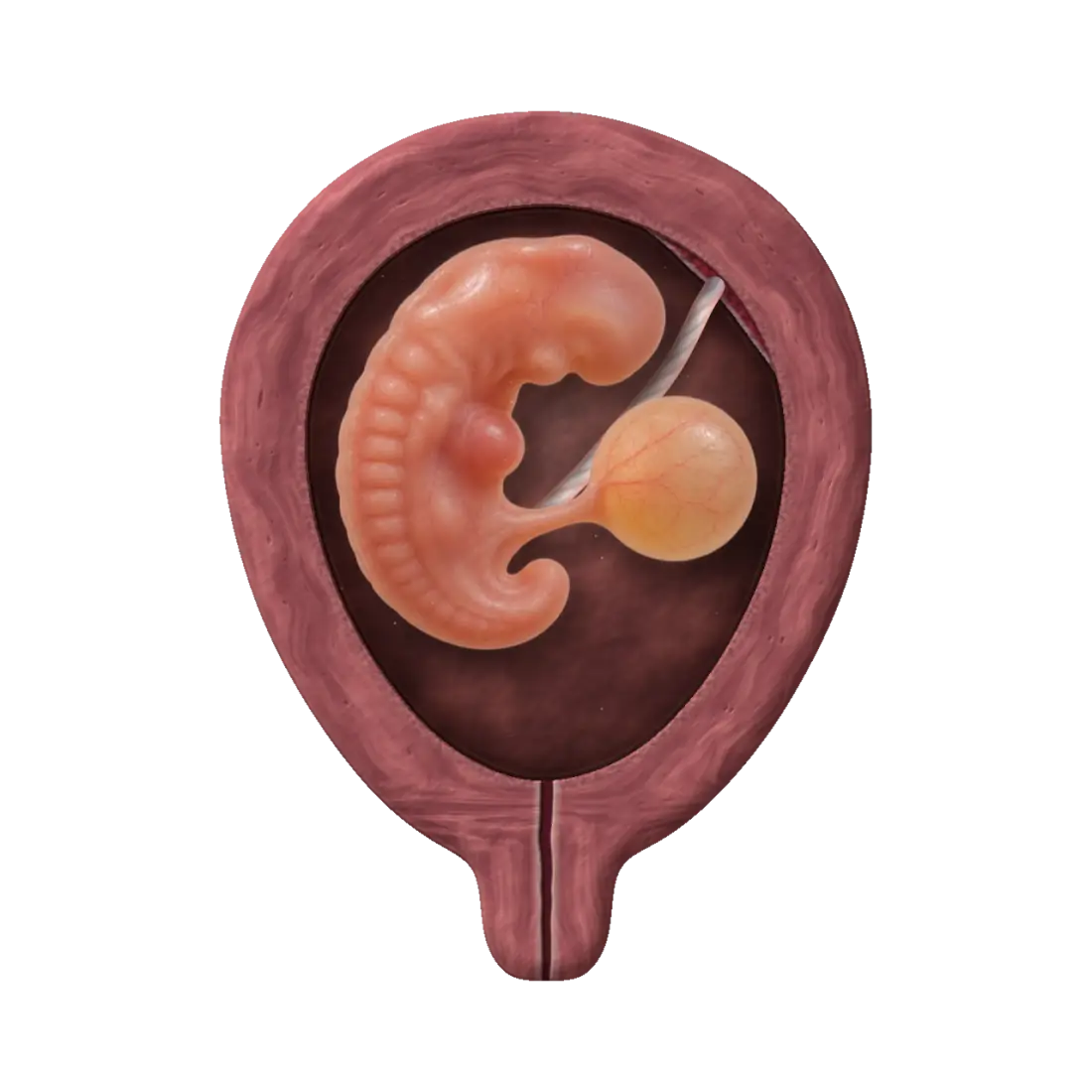
First trimester, week 5
5 weeks pregnant: The heart starts to beat
- Size of a
- Sesame seed

- Length
- ≈ 2 mm crown to rump
- Weight
- < 1 g
- Heart rate
- Just starting typical range
- Due date
- 245 days away 13% of the way
At 5 weeks pregnant, your baby is about the size of a sesame seed: roughly 2 mm from crown to rump, weighing less than 1 g. You’re in your first trimester, with about 35 weeks to go until your due date.
Your baby this week
- A simple tube-shaped heart forms and begins to beat around day 22 after conception. It is the first organ to work.
- The neural tube, which becomes the brain and spinal cord, is folding and closing along the embryo’s back.
- Blocks of tissue called somites line up along the back. They will become the vertebrae, back muscles and skin.
Your body this week
- Missed period, fatigue, breast tenderness and needing to pee more often are classic early signs.
- Nausea can begin now, although for many it starts closer to week 6.
- Your blood volume starts rising. It will increase by about 40–50% by late pregnancy.
- Typical weight gain so far
- 0.2–0.7 kg
- Your uterus
- About the size of a pear (unchanged to the eye)
Weight gain range is for a pre-pregnancy BMI of 18.5–24.9 (IOM guideline). Your provider may advise differently.
What to do after a positive test at 5 weeks
Contact a midwife or doctor to start your care. You usually don’t need to be seen straight away. In the UK, the first full “booking” appointment is usually between 8 and 12 weeks, and other countries have similar timing.
Tell them sooner if you have a long-term condition, take regular medicine, or have had a previous ectopic pregnancy or miscarriage, because your care may need planning earlier. Don’t stop a prescribed medicine on your own. Ask first.
Is it normal to see very little on a 5-week scan?
Yes. Routine scans don’t happen this early, so a 5-week scan is usually arranged for a specific reason, such as pain or bleeding. At this stage a scan may show only a small sac, and the heartbeat often can’t be seen until about week 6.
If a scan is inconclusive, you’ll usually be offered another one a week or two later. Dates can easily be a few days out, especially if your cycle isn’t regular, so an early scan with little to see doesn’t by itself mean something is wrong.
Spotting or cramps at 5 weeks
Bleeding in the first trimester is common, affecting roughly 15 to 25 in 100 pregnancies, and many of those pregnancies continue normally. Mild cramps can also happen as the womb changes. Even so, always tell your midwife or doctor about bleeding, because only an assessment can tell you the cause.
Get urgent care for strong pain on one side of your belly, pain at the tip of your shoulder, or feeling faint. These can be signs of an ectopic pregnancy.
Scans, tests and checkups
-
This weekHome pregnancy test Self-care
Detects hCG in urine. Most reliable from the first day of a missed period.
-
From week 6First prenatal visit & bloodwork Checkup
Health history, blood pressure, urine, blood type and Rh factor, blood count, and infection screening (hepatitis B, HIV, syphilis, rubella immunity). The UK aims to see you by 10 weeks.
-
From week 6Early / dating ultrasound Ultrasound
Confirms the pregnancy is in the uterus, sees the heartbeat, counts babies and dates the pregnancy. Often part of the first visit or combined with the 12-week scan.
Real size, next to an adult hand
Growth curve
When to call your midwife or doctor at 5 weeks
Call your midwife, doctor or maternity unit straight away, day or night, if you have any of these:
- Vaginal bleeding, with or without cramps.
- Strong pain low on one side of your belly, pain at the tip of your shoulder, or feeling faint. These can be signs of an ectopic pregnancy, which needs urgent care.
- Being sick so often that you can’t keep fluids down for a day.
- Fever of 38 °C (100.4 °F) or higher, or pain or burning when you pee.
- Pain or swelling in one leg, chest pain, or sudden shortness of breath. These can be signs of a blood clot.
- Feeling very low, hopeless or anxious most days. If you feel you might harm yourself, get emergency help.
Based on NHS and ACOG guidance. This list isn’t complete. If something feels wrong, call anyway. In an emergency, call your local emergency number.
Tip for this week
Eat small, frequent, bland meals and keep crackers by the bed. An empty stomach tends to make nausea worse.
Myth or fact?
Does morning sickness only happen in the morning?
MythNo. For most people, pregnancy nausea can strike at any time of day, and for some it lasts all day.
Read the evidenceCommon questions at this stage
More myths around week 5
Questions people ask about week 5
Can you see the baby on an ultrasound at 5 weeks?
A transvaginal scan usually shows the gestational sac, and sometimes a yolk sac, at 5 weeks. The embryo and heartbeat are often not visible until about 6 weeks, so an “empty” sac at 5 weeks is common and not necessarily worrying.
Does the baby have a heartbeat at 5 weeks?
The heart tube begins to beat during week 5 (around day 22 after conception), but it is usually too small to detect on ultrasound until week 6.
References
- NHS Best Start in Life: 5 weeks pregnant
- NHS: Your antenatal appointments
- ACOG: Bleeding during pregnancy
- NHS: Ectopic pregnancy
- NHS: Miscarriage
- NHS: Vomiting and morning sickness
- MedlinePlus (US National Library of Medicine): Fetal development
Advice differs between countries, so follow your own care team’s plan. Weights from week 20 are the WHO median, and earlier weights are approximate. How we check this.
All 40 weeks
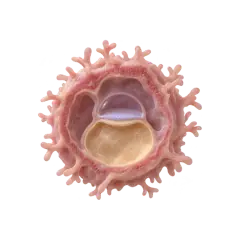
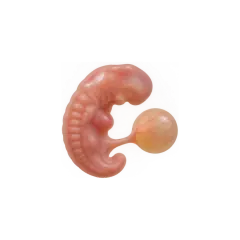
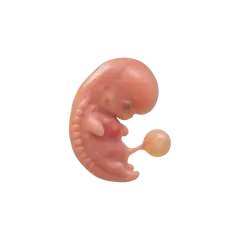
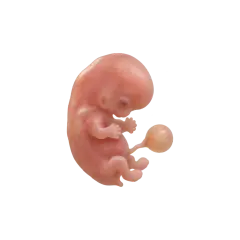
First trimester Weeks 1–13
From conception to a fully formed, tiny fetus. The most rapid change of the whole pregnancy.






Second trimester Weeks 14–27
Growth, movement and senses. Often the most comfortable stretch for parents.














Third trimester Weeks 28–40
Weight gain, brain and lung maturation, and getting into position for birth.