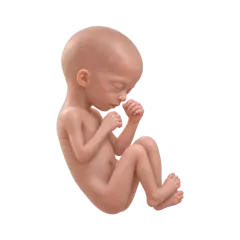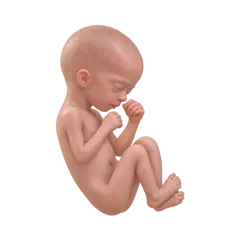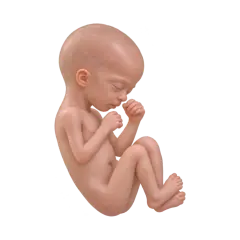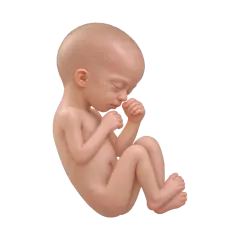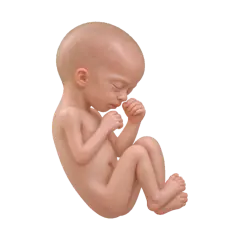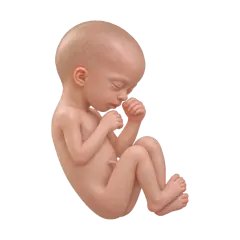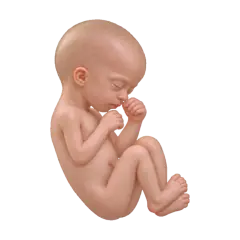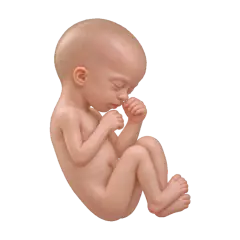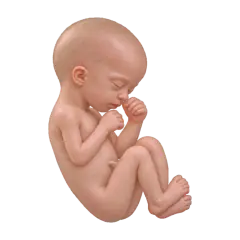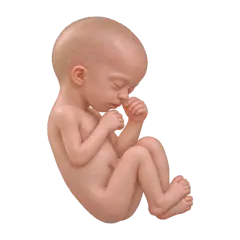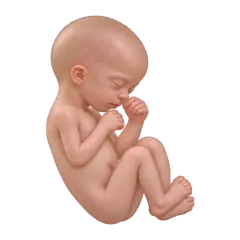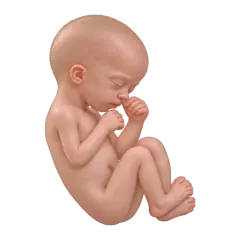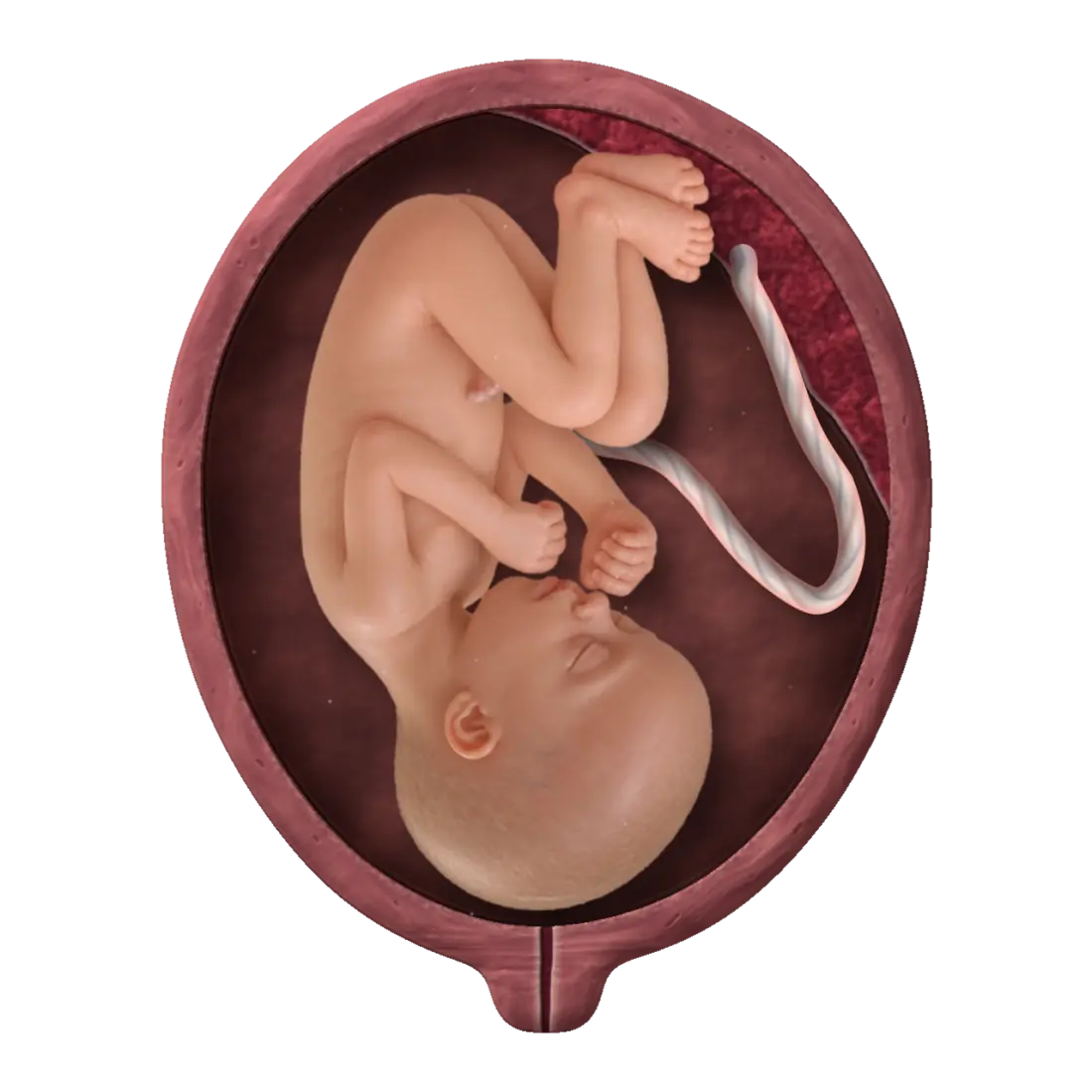
Third trimester, week 34
34 weeks pregnant: Turning towards the light
- Size of a
- Cantaloupe

- Length
- 45 cm head to heel
- Weight
- 2.3 kg WHO median
- Heart rate
- 110–160 bpm typical range
- Due date
- 42 days away 85% of the way
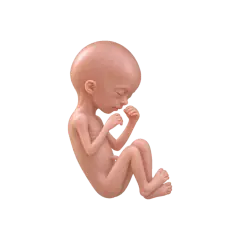
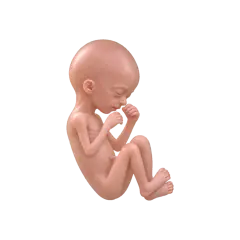
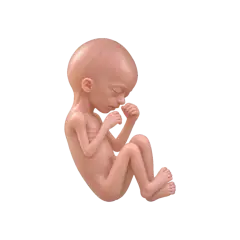
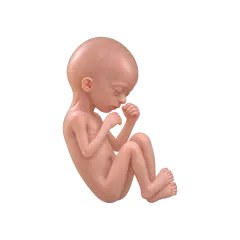
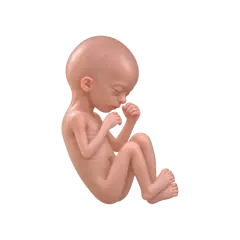
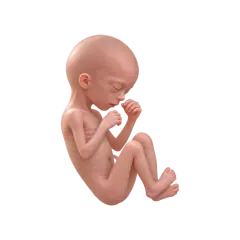
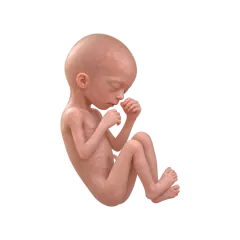
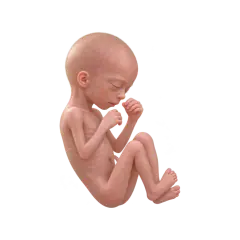
At 34 weeks pregnant, your baby is about the size of a cantaloupe: roughly 45 cm from head to heel, weighing about 2.3 kg. You’re in your third trimester, with about 6 weeks to go until your due date.
Your baby this week
- The central nervous system and lungs are maturing quickly.
- The vernix coating is thickening.
- Babies born at 34 weeks generally do well, though they may need short-term support.
Your body this week
- Blurry vision can happen from fluid changes. Sudden vision changes need checking, as they can signal pre-eclampsia.
- Fatigue and aches are common as the baby adds weight quickly.
- The baby may have “dropped” lower if this is your first pregnancy, which helps your breathing.
- Typical weight gain so far
- 9.1–12.9 kg
- Your uterus
- Fundal height ≈ 34 cm (±2 cm)
Weight gain range is for a pre-pregnancy BMI of 18.5–24.9 (IOM guideline). Your provider may advise differently.
Scans, tests and checkups
-
This weekKnow your baby’s movements Self-care
Get to know your baby’s pattern. If movements slow down, change or stop, contact your maternity unit straight away. Don’t wait until the next day.
-
This weekWhooping cough (Tdap) vaccine Vaccine
Antibodies pass to the baby and protect them in their first weeks. The US recommends 27–36 weeks. The NHS offers it from 16 weeks, usually around 20, and ideally before 32.
-
This weekRSV vaccine Vaccine
Protects newborns from RSV, a serious lung infection. The US gives it at 32–36 weeks in RSV season. The UK offers it from 28 weeks. Check local guidance.
-
From week 36Group B strep swab Self-care
A vaginal and rectal swab. If positive, antibiotics are given during labour. Routine in the US. The UK doesn’t screen routinely.
-
From week 36Baby’s position check Checkup
Checks whether the baby is head-down. If they are breech, turning the baby from the outside (ECV) may be offered.
-
From week 36Weekly checkups Checkup
Blood pressure, urine, growth, position and movements, plus planning for labour. Often weekly in the US. The NHS schedule is usually 36, 38 and 40 weeks.
Real size, next to an adult hand
Growth curve
When to call your midwife or doctor at 34 weeks
Call your midwife, doctor or maternity unit straight away, day or night, if you have any of these:
- A change in your baby’s usual pattern of movement. Call straight away rather than waiting until the next day.
- Vaginal bleeding, or a gush or steady trickle of fluid.
- Severe belly pain that doesn’t go away.
- A severe headache, vision changes, pain under your ribs, or sudden swelling of your face, hands or feet. These can be signs of pre-eclampsia.
- Regular tightenings, period-like cramps or lower back pressure that keep coming. This could be early labour.
- Intense itching, especially on your hands and feet, which can be a sign of a liver condition called cholestasis.
- Fever of 38 °C (100.4 °F) or higher, or pain or burning when you pee.
- Pain or swelling in one leg, chest pain, or sudden shortness of breath. These can be signs of a blood clot.
- Feeling very low, hopeless or anxious most days. If you feel you might harm yourself, get emergency help.
Based on NHS and ACOG guidance. This list isn’t complete. If something feels wrong, call anyway. In an emergency, call your local emergency number.
Tip for this week
Consider an antenatal class if you haven’t done one: birth, feeding and newborn care basics.
Common questions at this stage
Questions people ask about week 34
Is a baby born at 34 weeks safe?
Most babies born at 34 weeks do well, although some need help with breathing, feeding or temperature, and a short neonatal stay is common.
How big is the baby at 34 weeks?
About 45 cm from head to heel and around 2.3 kg, roughly the weight of a cantaloupe.
References
- NHS Best Start in Life: 34 weeks pregnant
- NHS: Your antenatal appointments
- NHS: Your baby’s movements
- NHS: Pre-eclampsia
- Kiserud T et al. The WHO Fetal Growth Charts. PLoS Medicine, 2017
- NHS: Itching and intrahepatic cholestasis of pregnancy
- NHS: Signs that labour has begun
- MedlinePlus (US National Library of Medicine): Fetal development
- Reid VM et al. The human fetus preferentially engages with face-like visual stimuli. Current Biology, 2017
Advice differs between countries, so follow your own care team’s plan. Weights from week 20 are the WHO median, and earlier weights are approximate. How we check this.
All 40 weeks
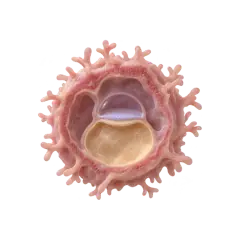
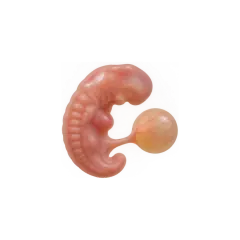
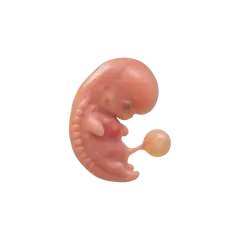
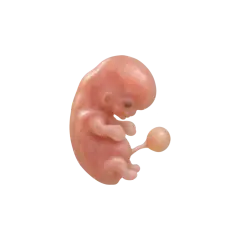
First trimester Weeks 1–13
From conception to a fully formed, tiny fetus. The most rapid change of the whole pregnancy.
Second trimester Weeks 14–27
Growth, movement and senses. Often the most comfortable stretch for parents.
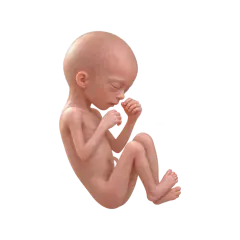

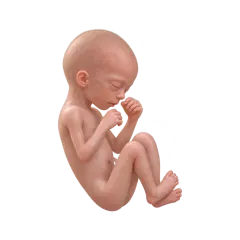
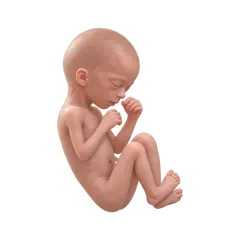
Third trimester Weeks 28–40
Weight gain, brain and lung maturation, and getting into position for birth.