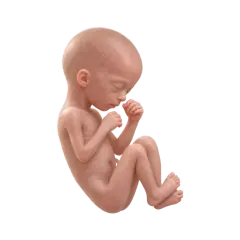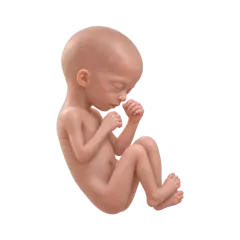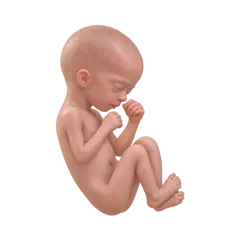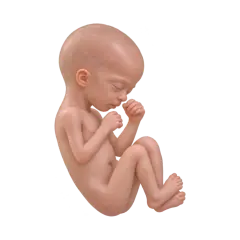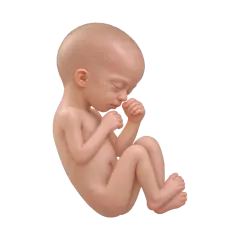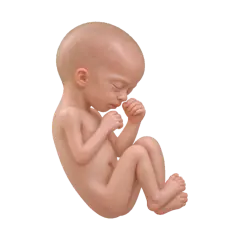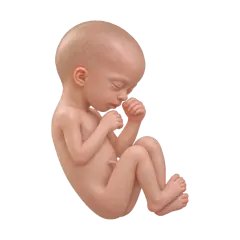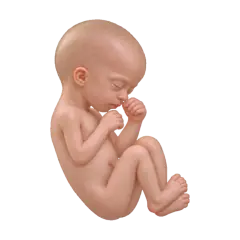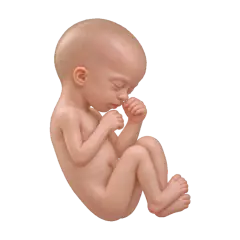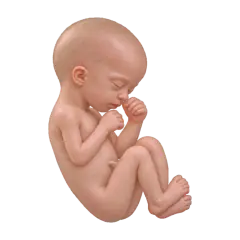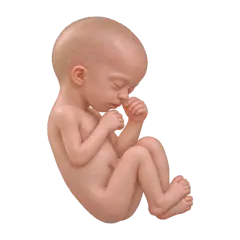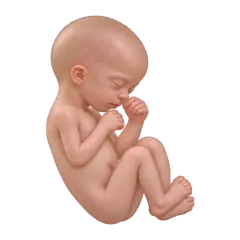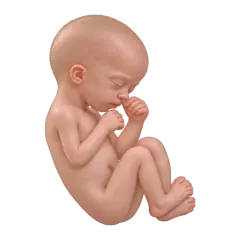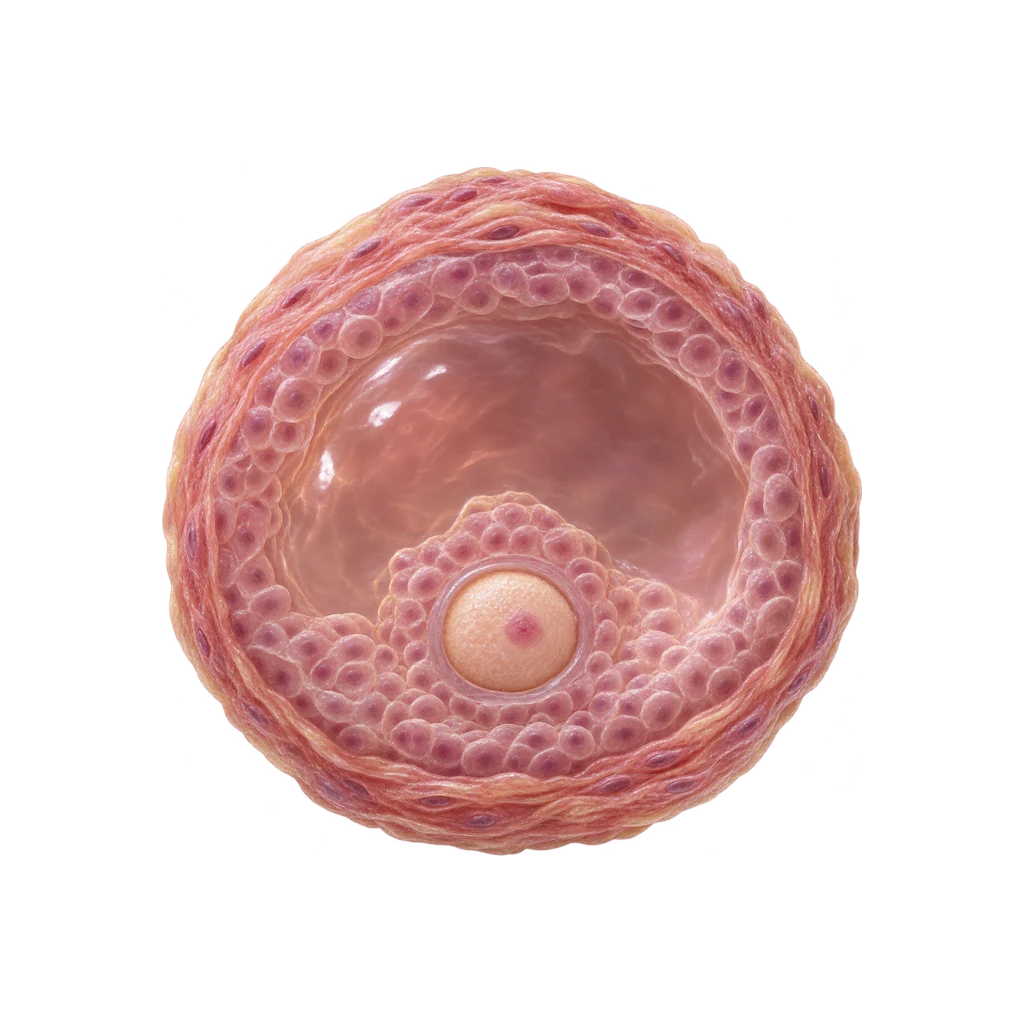
At 1 week pregnant there is no baby yet. Pregnancy is dated from the first day of your last period, so this is your period week, about two weeks before you conceive.
Your baby this week
- There is no embryo yet. Pregnancy is dated from the first day of your last period, so week 1 is your period week.
- Hormones (mainly FSH) wake up a group of follicles in your ovaries. Each follicle holds one immature egg.
- Only one follicle will usually win the race and release an egg about two weeks from now.
Your body this week
- Your period sheds last cycle’s uterine lining, and a fresh one starts to build right after.
- Cramps, tiredness and lower back ache are common and normal.
- If you are trying to conceive, this is a good moment to review medicines, supplements and habits with a clinician.
- Typical weight gain so far
- 0–0 kg
- Your uterus
- About the size of a pear (unchanged to the eye)
Weight gain range is for a pre-pregnancy BMI of 18.5–24.9 (IOM guideline). Your provider may advise differently.
Scans, tests and checkups
-
From week 4Home pregnancy test Self-care
Detects hCG in urine. Most reliable from the first day of a missed period.
Real size, next to an adult hand
Growth curve
Tip for this week
Start a daily folic acid supplement (400 micrograms) now if you are trying. It cuts the risk of neural tube defects, and the neural tube closes before most people know they are pregnant.
Myth or fact?
Is pregnancy really 9 months?
Partly trueRoughly. It is 40 weeks (280 days) from the first day of your last period, which is about 9 months and 1 week. From conception it is about 38 weeks.
Read the evidenceQuestions people ask about week 1
Am I pregnant at week 1?
No. Week 1 is the week of your period. Doctors count pregnancy from the first day of your last period because that date is easier to know than the exact day of conception. Conception usually happens around the end of week 2.
Why is pregnancy 40 weeks if conception happens at week 2?
The 40 weeks are counted from your last period, not from conception. From conception to birth is about 38 weeks.
References
- MedlinePlus (US National Library of Medicine): Fetal development
- NHS: Vitamins, supplements and nutrition in pregnancy
Advice differs between countries, so follow your own care team’s plan. Weights from week 20 are the WHO median, and earlier weights are approximate. How we check this.
All 40 weeks
First trimester Weeks 1–13
From conception to a fully formed, tiny fetus. The most rapid change of the whole pregnancy.
Second trimester Weeks 14–27
Growth, movement and senses. Often the most comfortable stretch for parents.
Third trimester Weeks 28–40
Weight gain, brain and lung maturation, and getting into position for birth.