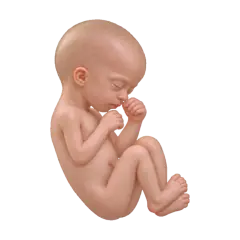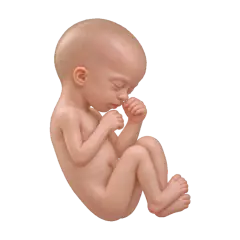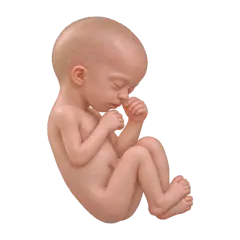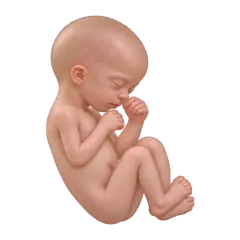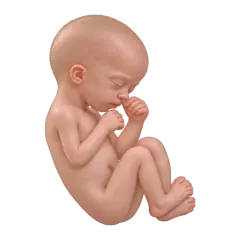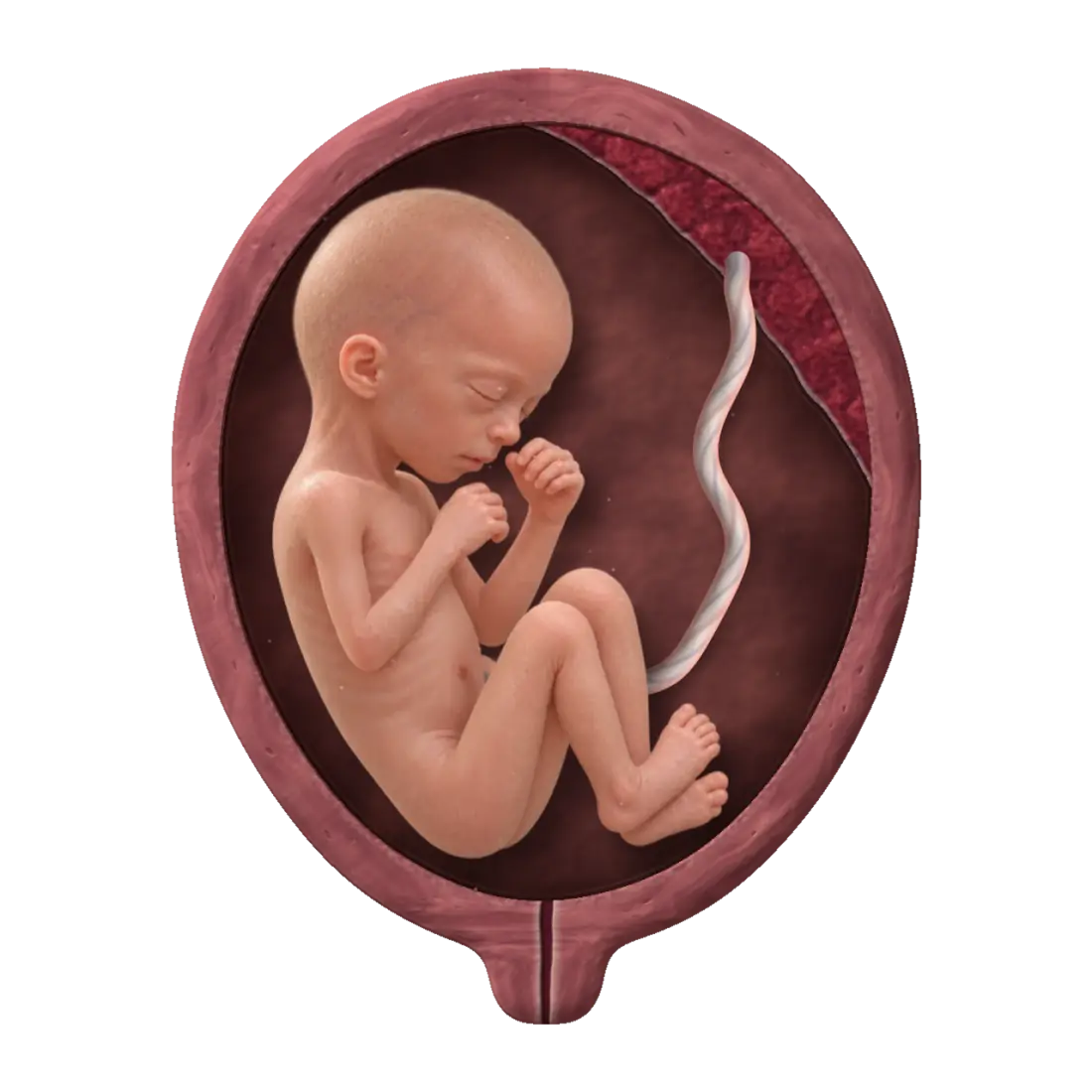
Second trimester, week 27
27 weeks pregnant: Last week of the second trimester
- Size of a
- Head of lettuce

- Length
- 36.6 cm head to heel
- Weight
- 1.0 kg WHO median
- Heart rate
- 110–160 bpm typical range
- Due date
- 91 days away 68% of the way
At 27 weeks pregnant, your baby is about the size of a head of lettuce: roughly 36.6 cm from head to heel, weighing about 1.0 kg. You’re in your second trimester, with about 13 weeks to go until your due date.
Your baby this week
- The brain is very active, and sleep–wake cycles are becoming more regular.
- You may feel hiccups as small, rhythmic jerks.
- The retina, the light-sensitive layer at the back of the eye, is developing.
Your body this week
- Whooping cough vaccine is often given now. The US recommends 27–36 weeks, and the UK offers it from 16 weeks.
- If you are Rh-negative, you may be offered anti-D around 28 weeks.
- Tiredness may return as the baby gets heavier.
- Typical weight gain so far
- 6.2–9.3 kg
- Your uterus
- Fundal height ≈ 27 cm (±2 cm)
Weight gain range is for a pre-pregnancy BMI of 18.5–24.9 (IOM guideline). Your provider may advise differently.
Scans, tests and checkups
-
This weekKnow your baby’s movements Self-care
Get to know your baby’s pattern. If movements slow down, change or stop, contact your maternity unit straight away. Don’t wait until the next day.
-
This weekGlucose test (gestational diabetes) Blood test
A sugary drink followed by blood sugar checks. The UK offers it based on risk factors. The US screens almost everyone.
-
This weekWhooping cough (Tdap) vaccine Vaccine
Antibodies pass to the baby and protect them in their first weeks. The US recommends 27–36 weeks. The NHS offers it from 16 weeks, usually around 20, and ideally before 32.
-
From week 28Anti-D (if Rh-negative) & repeat bloods Blood test
If your blood group is Rh-negative, anti-D immunoglobulin is offered around 28 weeks. Blood count and antibodies are often rechecked.
-
From week 28RSV vaccine Vaccine
Protects newborns from RSV, a serious lung infection. The US gives it at 32–36 weeks in RSV season. The UK offers it from 28 weeks. Check local guidance.
Real size, next to an adult hand
Growth curve
When to call your midwife or doctor at 27 weeks
Call your midwife, doctor or maternity unit straight away, day or night, if you have any of these:
- A change in your baby’s usual pattern of movement. Call straight away rather than waiting until the next day.
- Vaginal bleeding, or a gush or steady trickle of fluid.
- Severe belly pain that doesn’t go away.
- A severe headache, vision changes, pain under your ribs, or sudden swelling of your face, hands or feet. These can be signs of pre-eclampsia.
- Regular tightenings, period-like cramps or lower back pressure that keep coming. This could be early labour.
- Fever of 38 °C (100.4 °F) or higher, or pain or burning when you pee.
- Pain or swelling in one leg, chest pain, or sudden shortness of breath. These can be signs of a blood clot.
- Feeling very low, hopeless or anxious most days. If you feel you might harm yourself, get emergency help.
Based on NHS and ACOG guidance. This list isn’t complete. If something feels wrong, call anyway. In an emergency, call your local emergency number.
Tip for this week
Start getting to know your baby’s movement pattern: when they’re most active and how it feels.
Myth or fact?
Do you have to give up coffee completely during pregnancy?
MythNot necessarily. Most guidelines say up to 200 mg of caffeine a day, about one or two cups of coffee, is acceptable.
Read the evidenceCommon questions at this stage
Questions people ask about week 27
Are baby hiccups in the womb normal?
Yes. They feel like rhythmic taps or jerks, often in the same spot, and are very common. They are thought to help the diaphragm practise breathing.
When does the third trimester start?
At 28 weeks 0 days. It lasts until birth.
References
- NHS Best Start in Life: 27 weeks pregnant
- NHS: Your antenatal appointments
- Mayo Clinic: Fetal development, the second trimester
- NHS: Your baby’s movements
- NHS: Pre-eclampsia
- Kiserud T et al. The WHO Fetal Growth Charts. PLoS Medicine, 2017
- MedlinePlus (US National Library of Medicine): Fetal development
Advice differs between countries, so follow your own care team’s plan. Weights from week 20 are the WHO median, and earlier weights are approximate. How we check this.
All 40 weeks
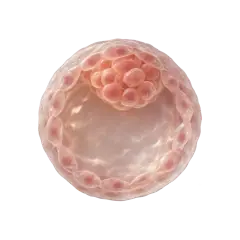
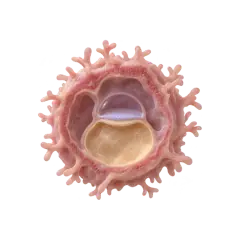
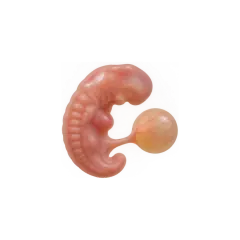
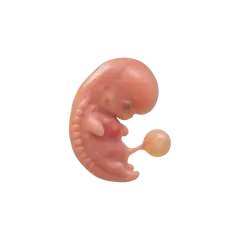
First trimester Weeks 1–13
From conception to a fully formed, tiny fetus. The most rapid change of the whole pregnancy.
Second trimester Weeks 14–27
Growth, movement and senses. Often the most comfortable stretch for parents.









Third trimester Weeks 28–40
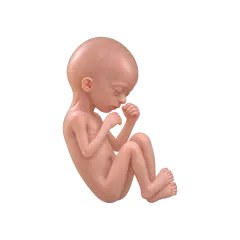
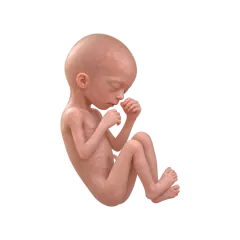
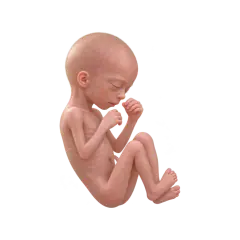
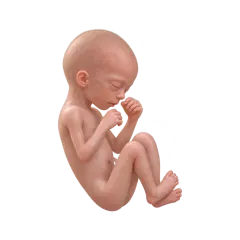
Weight gain, brain and lung maturation, and getting into position for birth.