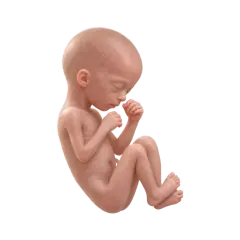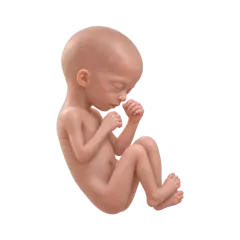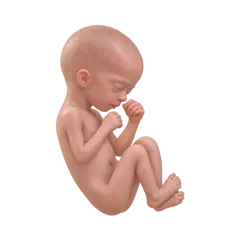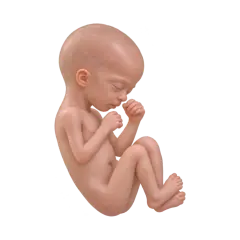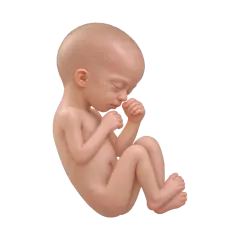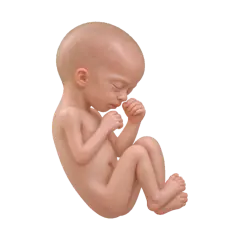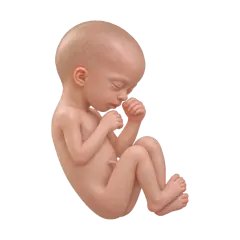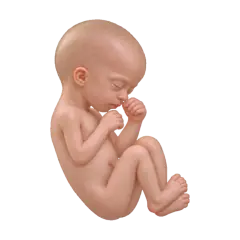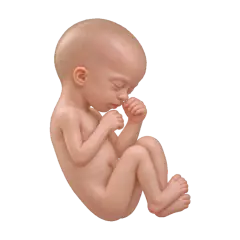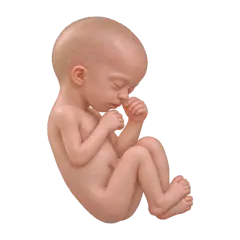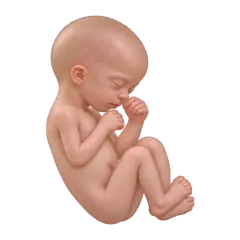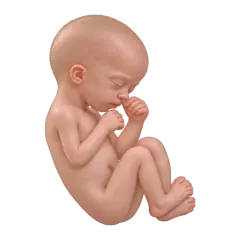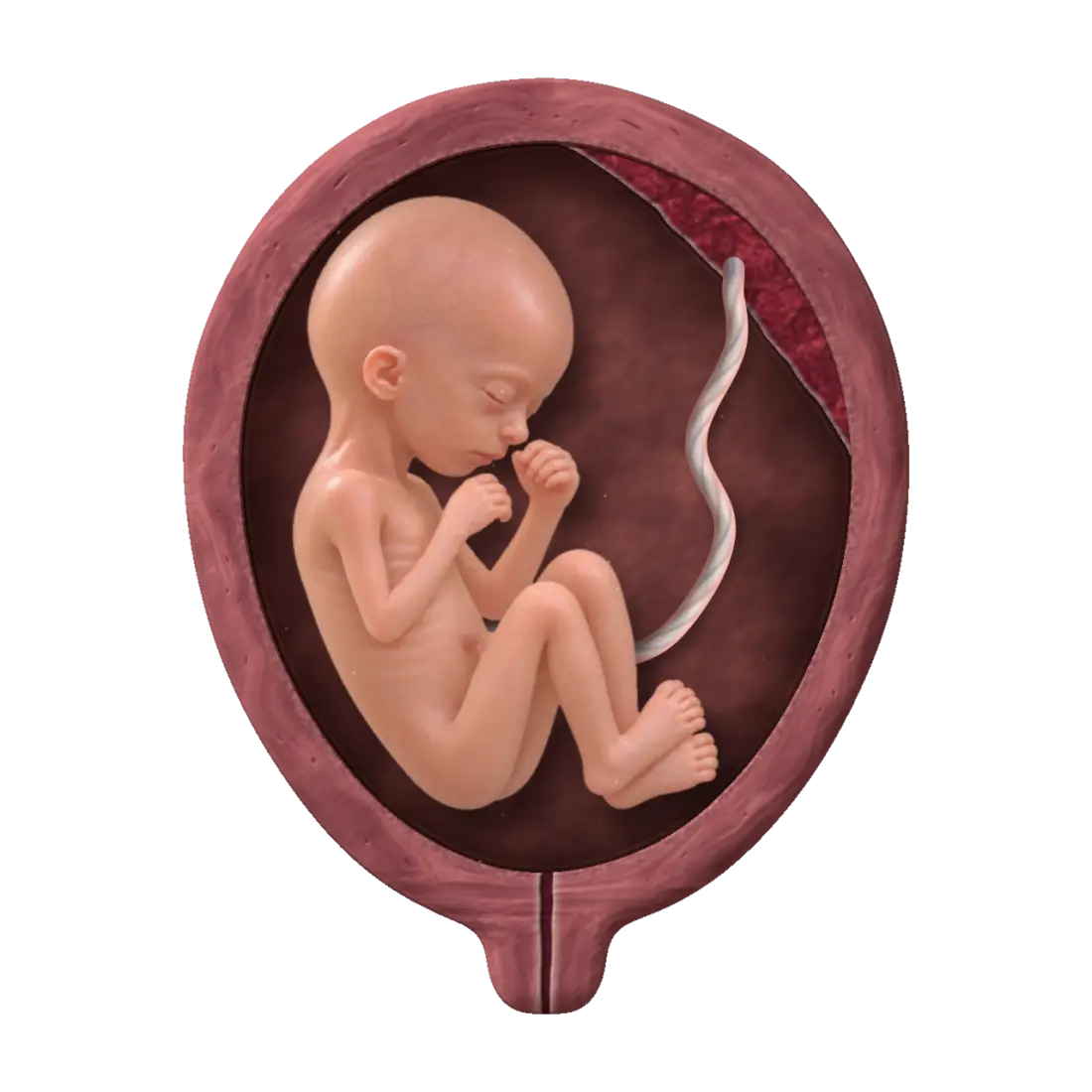
Second trimester, week 20
20 weeks pregnant: Halfway there
- Size of a
- Banana

- Length
- 25.6 cm head to heel
- Weight
- 330 g WHO median
- Heart rate
- 110–160 bpm typical range
- Due date
- 140 days away 50% of the way
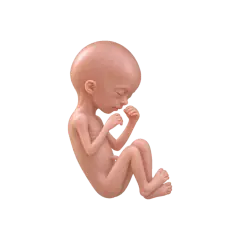
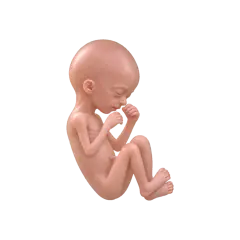
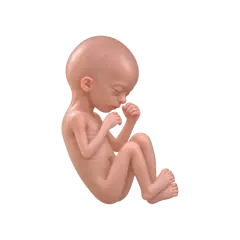
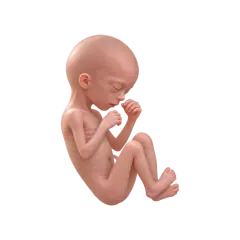
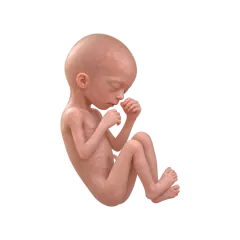
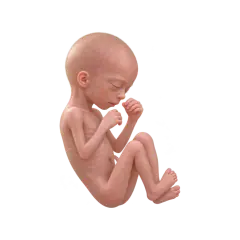
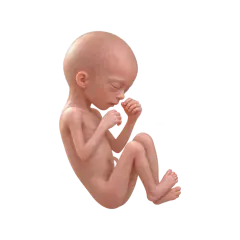
At 20 weeks pregnant, your baby is about the size of a banana: roughly 25.6 cm from head to heel, weighing about 330 g. You’re in your second trimester, with about 20 weeks to go until your due date.
Your baby this week
- From now on, size is usually measured from head to heel, which is why the length seems to jump.
- The baby swallows amniotic fluid and makes meconium, the sticky first poop.
- A baby girl’s ovaries hold about 6–7 million immature eggs, the most she will ever have.
Your body this week
- The top of your uterus is roughly level with your belly button.
- The anatomy scan checks the baby’s organs, growth, placenta position and amniotic fluid.
- Your belly button may start to flatten or pop out.
- Typical weight gain so far
- 3.4–5.6 kg
- Your uterus
- Around your belly button
Weight gain range is for a pre-pregnancy BMI of 18.5–24.9 (IOM guideline). Your provider may advise differently.
What the 20-week scan checks
The NHS usually offers this scan between 18 and 21 weeks, and in some cases up to 23 weeks. It usually takes about 30 minutes, or longer if the baby is in an awkward position. In the US it’s often called the anatomy scan, typically at 18 to 22 weeks. Having it is your choice.
The sonographer looks in detail at the baby’s body and checks their growth, the placenta and blood flow in the womb. The scan looks for 11 specific conditions: anencephaly, open spina bifida, cleft lip, diaphragmatic hernia, gastroschisis, exomphalos, serious heart problems, bilateral renal agenesis, severe skeletal dysplasia, and Edwards’ and Patau’s syndromes.
What the scan can’t tell you
It can’t find every condition, and some show up more clearly than others. A normal scan is reassuring, but it isn’t a guarantee. Sometimes the picture just isn’t clear enough because of how the baby is lying, and you may be asked to come back for another look. That alone isn’t a sign of a problem.
If the scan finds something
You’ll be told once all the checks are done. You may then be offered more scans or tests, such as amniocentesis, and a referral to a specialist who can say whether the baby definitely has a condition and what it means. You can take time to ask questions and decide what you want to do next. Read the full anatomy scan guide.
Finding out the sex at the 20-week scan
You may be asked whether you want to know, if the baby’s position allows it. It isn’t the purpose of the scan, and not every hospital will tell you, so ask ahead. Compare every way to find out and how accurate each one is.
Scans, tests and checkups
-
This weekSecond-trimester (quad) screening Blood test
A blood test (AFP, hCG, estriol, inhibin-A) for chromosomal conditions and neural tube defects, if you didn’t have first-trimester screening or NIPT. The NHS offers it at 14–20 weeks.
-
This weekAmniocentesis Diagnostic
Diagnostic test on a small sample of amniotic fluid. Offered after a high-chance screening result. The NHS gives the miscarriage risk as about 1 in 200. A 2019 review estimated the added risk at about 0.3%.
Baby’s sex: Diagnostic, only done for medical reasons
-
This weekAnatomy scan (anomaly scan) Ultrasound
A detailed ultrasound of the baby’s brain, heart, spine, face, kidneys, limbs and growth, plus the placenta position and fluid. The NHS usually does it at 18–21 weeks.
Baby’s sex: Sex usually visible if the baby’s position allows. Ask if your hospital reports it
-
From week 24Know your baby’s movements Self-care
Get to know your baby’s pattern. If movements slow down, change or stop, contact your maternity unit straight away. Don’t wait until the next day.
-
From week 24Glucose test (gestational diabetes) Blood test
A sugary drink followed by blood sugar checks. The UK offers it based on risk factors. The US screens almost everyone.
Real size, next to an adult hand
Growth curve
When to call your midwife or doctor at 20 weeks
Call your midwife, doctor or maternity unit straight away, day or night, if you have any of these:
- Vaginal bleeding, or a gush or steady trickle of fluid.
- Severe belly pain that doesn’t go away.
- A severe headache, vision changes, pain under your ribs, or sudden swelling of your face, hands or feet. These can be signs of pre-eclampsia.
- Regular tightenings, period-like cramps or lower back pressure that keep coming. This could be early labour.
- Fever of 38 °C (100.4 °F) or higher, or pain or burning when you pee.
- Pain or swelling in one leg, chest pain, or sudden shortness of breath. These can be signs of a blood clot.
- Feeling very low, hopeless or anxious most days. If you feel you might harm yourself, get emergency help.
Based on NHS and ACOG guidance. This list isn’t complete. If something feels wrong, call anyway. In an emergency, call your local emergency number.
Tip for this week
Anatomy scan tip: drink water beforehand if advised, bring questions, and tell the sonographer if you do or don’t want to know the sex.
Myth or fact?
Is the Chinese gender calendar accurate?
MythNo. When tested on real birth records, it performed no better than guessing.
Read the evidenceCommon questions at this stage
More myths around week 20
Questions people ask about week 20
How big is the baby at 20 weeks?
About 25.6 cm from head to heel and around 330 grams, roughly the length of a banana.
Can the anatomy scan be wrong about gender?
It is rare but possible, particularly if the view is poor. Reported accuracy is typically above 95–99% when the genitals are clearly seen.
References
- NHS Best Start in Life: 20 weeks pregnant
- NHS: 20-week scan
- NHS: Your antenatal appointments
- Mayo Clinic: Fetal development, the second trimester
- NHS: Your baby’s movements
- NHS: Pre-eclampsia
- Kiserud T et al. The WHO Fetal Growth Charts. PLoS Medicine, 2017
- MedlinePlus (US National Library of Medicine): Fetal development
Advice differs between countries, so follow your own care team’s plan. Weights from week 20 are the WHO median, and earlier weights are approximate. How we check this.
All 40 weeks
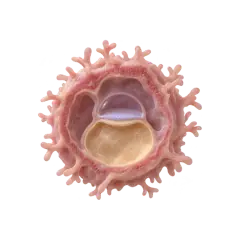
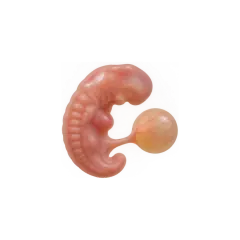
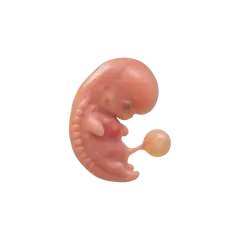
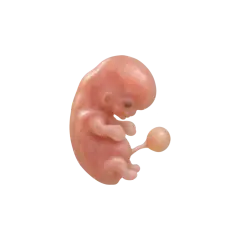
First trimester Weeks 1–13
From conception to a fully formed, tiny fetus. The most rapid change of the whole pregnancy.
Second trimester Weeks 14–27
Growth, movement and senses. Often the most comfortable stretch for parents.
Third trimester Weeks 28–40
Weight gain, brain and lung maturation, and getting into position for birth.