Second trimester: weeks 14 to 27
For many people the sickness eases and energy returns. It’s when you’ll usually feel your baby move for the first time, and when the main mid-pregnancy scan happens.
When is the second trimester?
This site counts it as weeks 14 to 27, from 14 weeks 0 days to 27 weeks 6 days. The NHS week-by-week guide starts it at week 13.
How your baby develops
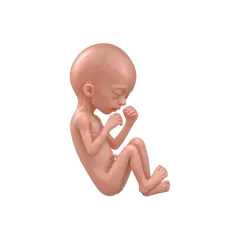
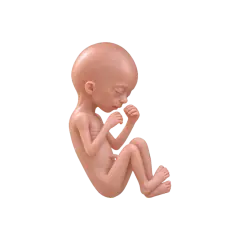
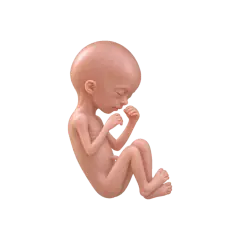
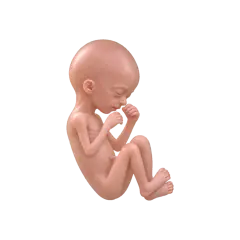
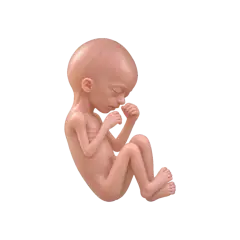
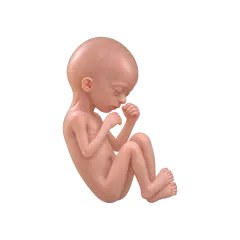
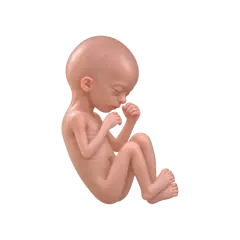
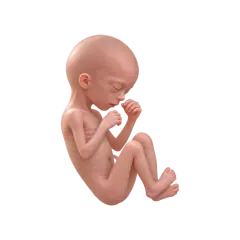
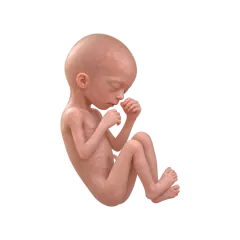
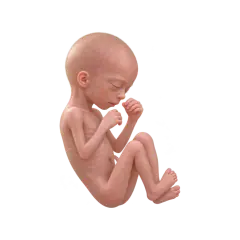
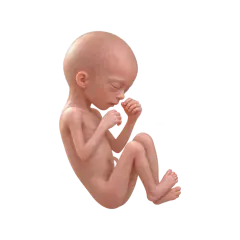
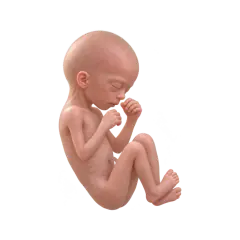
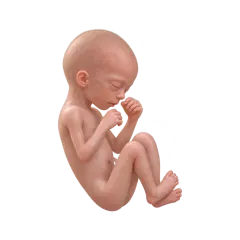
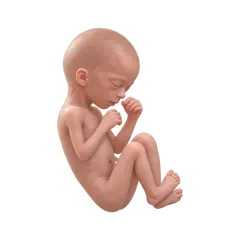
Your baby grows from about 9 cm from head to bottom at week 14 to about 37 cm from head to heel at week 27, and from about 40 g to about 1 kg. Measurements switch to head to heel at week 20, which is why the length seems to jump.
The bones get harder, and fine hair called lanugo appears. Your baby can hear by about weeks 19 to 21. From about week 27, the lungs produce surfactant, which helps them work after birth.
Feeling your baby move
Movements are usually first felt between 16 and 24 weeks. In a first pregnancy you may not notice them until after 20 weeks. If you haven’t felt any by 24 weeks, tell your midwife.
Once you know your baby’s pattern, call your midwife or maternity unit immediately if movements slow down, stop or change. There’s no set number of kicks to count.
Common symptoms
Sickness usually eases somewhere between weeks 12 and 20. Other things you may notice include:
- Indigestion and heartburn, more common from about 12 weeks
- Back pain, which is very common
- Sharp twinges low in the belly as the ligaments stretch
- Swollen ankles, feet and fingers, often worse at the end of the day
Appointments, scans and vaccines
The anatomy scan is usually at 18 to 21 weeks. In the UK you’ll also have an appointment at 16 weeks, and at 25 weeks for a first baby. Testing for gestational diabetes is usually between 24 and 28 weeks.
The NHS offers the whooping cough vaccine from 16 weeks, usually around 20. In the US it’s given at 27 to 36 weeks. See the full timeline.
Is sex safe?
ACOG says most sexual activity is safe in a healthy pregnancy, because the amniotic sac and the muscles of the womb protect your baby. Cramps or spotting afterwards are normal. Call if you have severe, persistent cramping or heavy bleeding, and ask your doctor if you have complications. Desire varies, and you may want to try different positions.
When to get help
Call your midwife, doctor or maternity unit straight away, day or night, if you have any of these:
- A change in your baby’s usual pattern of movement. Call straight away rather than waiting until the next day.
- Vaginal bleeding, or a gush or steady trickle of fluid.
- Severe belly pain that doesn’t go away.
- A severe headache, vision changes, pain under your ribs, or sudden swelling of your face, hands or feet. These can be signs of pre-eclampsia.
- Regular tightenings, period-like cramps or lower back pressure that keep coming. This could be early labour.
- Fever of 38 °C (100.4 °F) or higher, or pain or burning when you pee.
- Pain or swelling in one leg, chest pain, or sudden shortness of breath. These can be signs of a blood clot.
- Feeling very low, hopeless or anxious most days. If you feel you might harm yourself, get emergency help.
Based on NHS and ACOG guidance. This list isn’t complete. If something feels wrong, call anyway. In an emergency, call your local emergency number.
References
- ACOG: Is it safe to have sex during pregnancy?
- NHS Best Start in Life: Week-by-week guide, second trimester
- NHS: Your baby’s movements
- NHS: 20-week scan
- NHS: Vomiting and morning sickness
- NHS: Severe vomiting in pregnancy
- NHS: Indigestion and heartburn in pregnancy
- NHS: Back pain in pregnancy
- NHS: Swollen ankles, feet and fingers in pregnancy
- NHS: Gestational diabetes
- NHS: Vaccinations in pregnancy
- CDC: Whooping cough vaccine recommendations
- NHS: Your antenatal appointments
- NHS: Pre-eclampsia
- MedlinePlus (US National Library of Medicine): Fetal development
- Kiserud T et al. The WHO Fetal Growth Charts. PLoS Medicine, 2017
Advice differs between countries, so follow your own care team’s plan. How we check this.
Second trimester, week by week
Second trimester Weeks 14–27
Growth, movement and senses. Often the most comfortable stretch for parents.