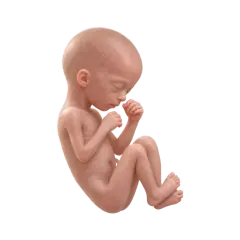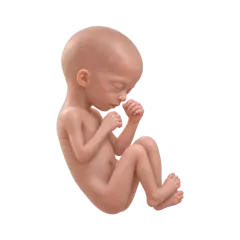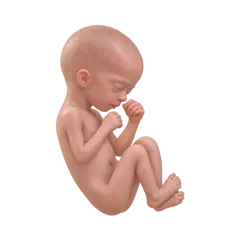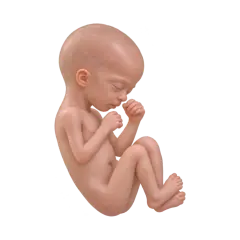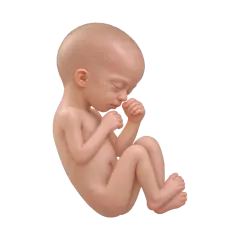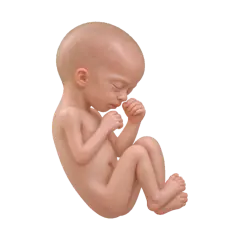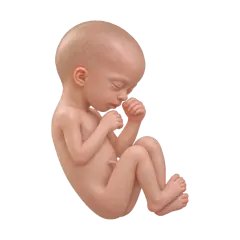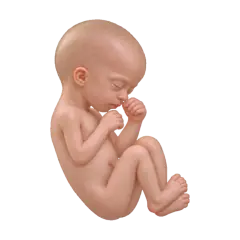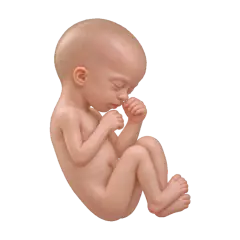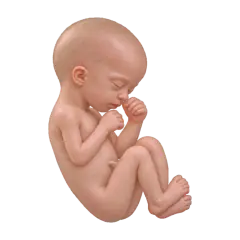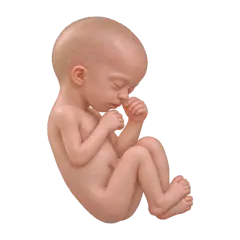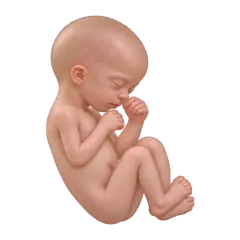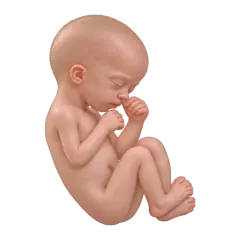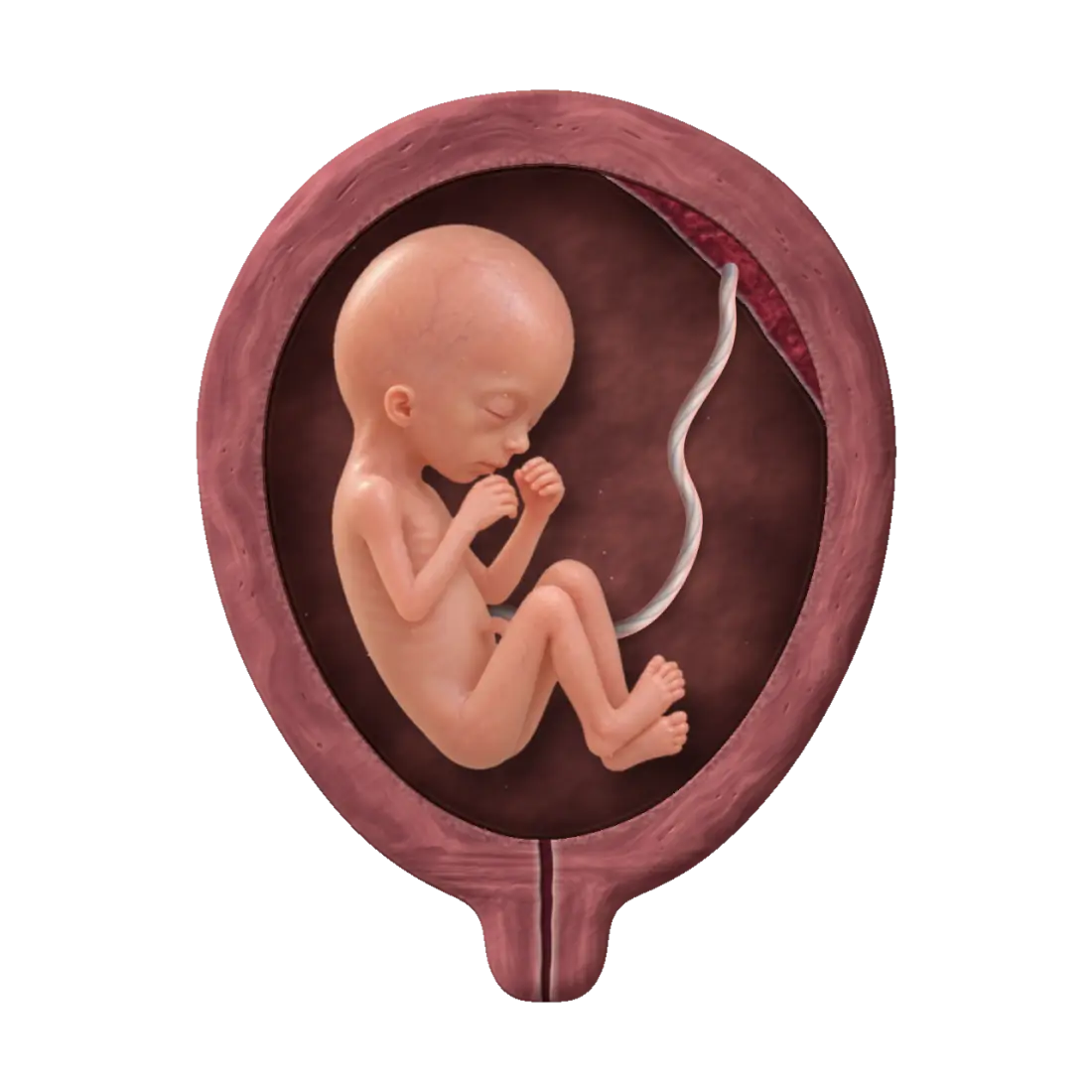
First trimester, week 13
13 weeks pregnant: Last week of the first trimester
- Size of a
- Lemon

- Length
- 7.4 cm crown to rump
- Weight
- 23 g approximate
- Heart rate
- 140–170 bpm typical range
- Due date
- 189 days away 33% of the way
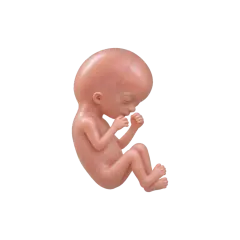
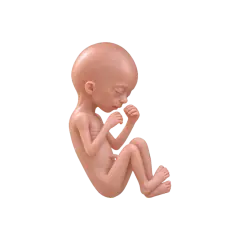
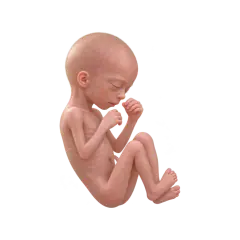
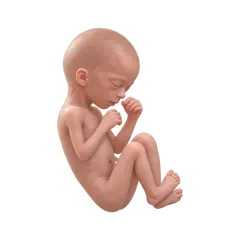
At 13 weeks pregnant, your baby is about the size of a lemon: roughly 7.4 cm from crown to rump, weighing about 23 g. You’re in your first trimester, with about 27 weeks to go until your due date.
Your baby this week
- Vocal cords are forming, although the baby won’t make sounds until after birth.
- Tiny ridges on the fingertips are starting to form. They will become unique fingerprints.
- In girls, the ovaries already contain millions of immature eggs.
Your body this week
- The placenta has fully taken over hormone production from the ovaries.
- Many people feel a welcome lift in energy and appetite.
- Increased vaginal discharge (thin, milky and mild-smelling) is normal. Itching, a strong smell or colour changes are worth checking.
- Typical weight gain so far
- 0.5–2 kg
- Your uterus
- Just above the pubic bone
Weight gain range is for a pre-pregnancy BMI of 18.5–24.9 (IOM guideline). Your provider may advise differently.
Scans, tests and checkups
-
This weekNIPT (cell-free DNA blood test) Blood test
A blood test that screens for Down syndrome (trisomy 21), trisomies 18 and 13, and can report sex chromosomes. It is a screening test. A high-chance result is confirmed with CVS or amniocentesis.
Baby’s sex: Sex from ~10 weeks, typically >98–99% accurate
-
This weekCVS (chorionic villus sampling) Diagnostic
Diagnostic test on a tiny placenta sample, offered after a high-chance screening result or known family condition. The NHS gives the miscarriage risk as less than 1 in 200 for most pregnancies. The UK usually does it at 11–14 weeks.
Baby’s sex: Diagnostic, only done for medical reasons
-
This weekNT scan / 12-week scan Ultrasound
Measures the fluid at the back of the baby’s neck (nuchal translucency). Combined with blood hormones, it estimates the chance of chromosomal conditions. The window is about 11 weeks to 13 weeks 6 days.
-
From week 15Second-trimester (quad) screening Blood test
A blood test (AFP, hCG, estriol, inhibin-A) for chromosomal conditions and neural tube defects, if you didn’t have first-trimester screening or NIPT. The NHS offers it at 14–20 weeks.
-
From week 15Amniocentesis Diagnostic
Diagnostic test on a small sample of amniotic fluid. Offered after a high-chance screening result. The NHS gives the miscarriage risk as about 1 in 200. A 2019 review estimated the added risk at about 0.3%.
Baby’s sex: Diagnostic, only done for medical reasons
Real size, next to an adult hand
Growth curve
When to call your midwife or doctor at 13 weeks
Call your midwife, doctor or maternity unit straight away, day or night, if you have any of these:
- Vaginal bleeding, with or without cramps.
- Strong pain low on one side of your belly, pain at the tip of your shoulder, or feeling faint. These can be signs of an ectopic pregnancy, which needs urgent care.
- Being sick so often that you can’t keep fluids down for a day.
- Fever of 38 °C (100.4 °F) or higher, or pain or burning when you pee.
- Pain or swelling in one leg, chest pain, or sudden shortness of breath. These can be signs of a blood clot.
- Feeling very low, hopeless or anxious most days. If you feel you might harm yourself, get emergency help.
Based on NHS and ACOG guidance. This list isn’t complete. If something feels wrong, call anyway. In an emergency, call your local emergency number.
Tip for this week
If you are due a 12-week or NT scan and haven’t had it, the window closes at 13 weeks 6 days.
Myth or fact?
Is the nub theory accurate at 12 or 13 weeks?
Partly trueIt can be fairly accurate at 12–13 weeks in experienced hands, but it is an educated guess, not a diagnosis.
Read the evidenceCommon questions at this stage
Questions people ask about week 13
Is it true you can detect gender at 13 weeks?
Partly. At 12–13 weeks, experienced sonographers using the nub theory are often right, with studies reporting up to about 90% or more. It is still a prediction, not a diagnosis. Confirmation comes from NIPT or the 18–22 week anatomy scan.
When does the second trimester start?
At 14 weeks 0 days. The first trimester runs to 13 weeks 6 days, the second to 27 weeks 6 days, and the third from 28 weeks until birth.
References
- NHS Best Start in Life: 13 weeks pregnant
- NHS: Your antenatal appointments
- NHS: Ectopic pregnancy
- NHS: Miscarriage
- NHS: Vomiting and morning sickness
- Mayo Clinic: Fetal development, the first trimester
- MedlinePlus (US National Library of Medicine): Fetal development
Advice differs between countries, so follow your own care team’s plan. Weights from week 20 are the WHO median, and earlier weights are approximate. How we check this.
All 40 weeks
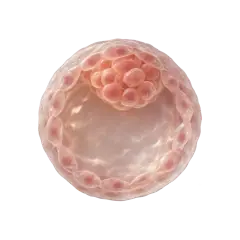
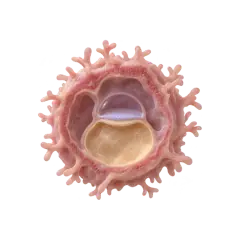
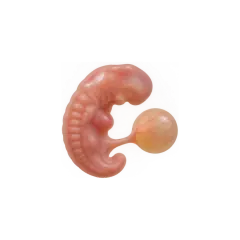
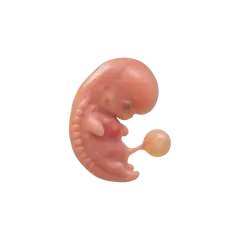
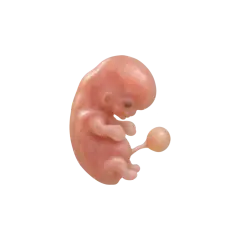
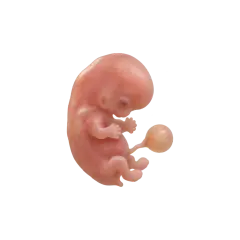
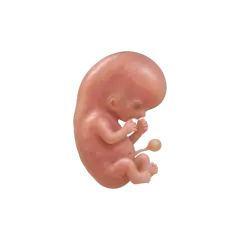
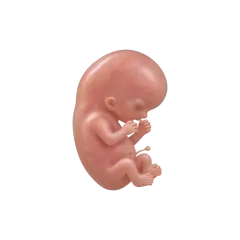
First trimester Weeks 1–13
From conception to a fully formed, tiny fetus. The most rapid change of the whole pregnancy.
Second trimester Weeks 14–27
Growth, movement and senses. Often the most comfortable stretch for parents.
Third trimester Weeks 28–40
Weight gain, brain and lung maturation, and getting into position for birth.