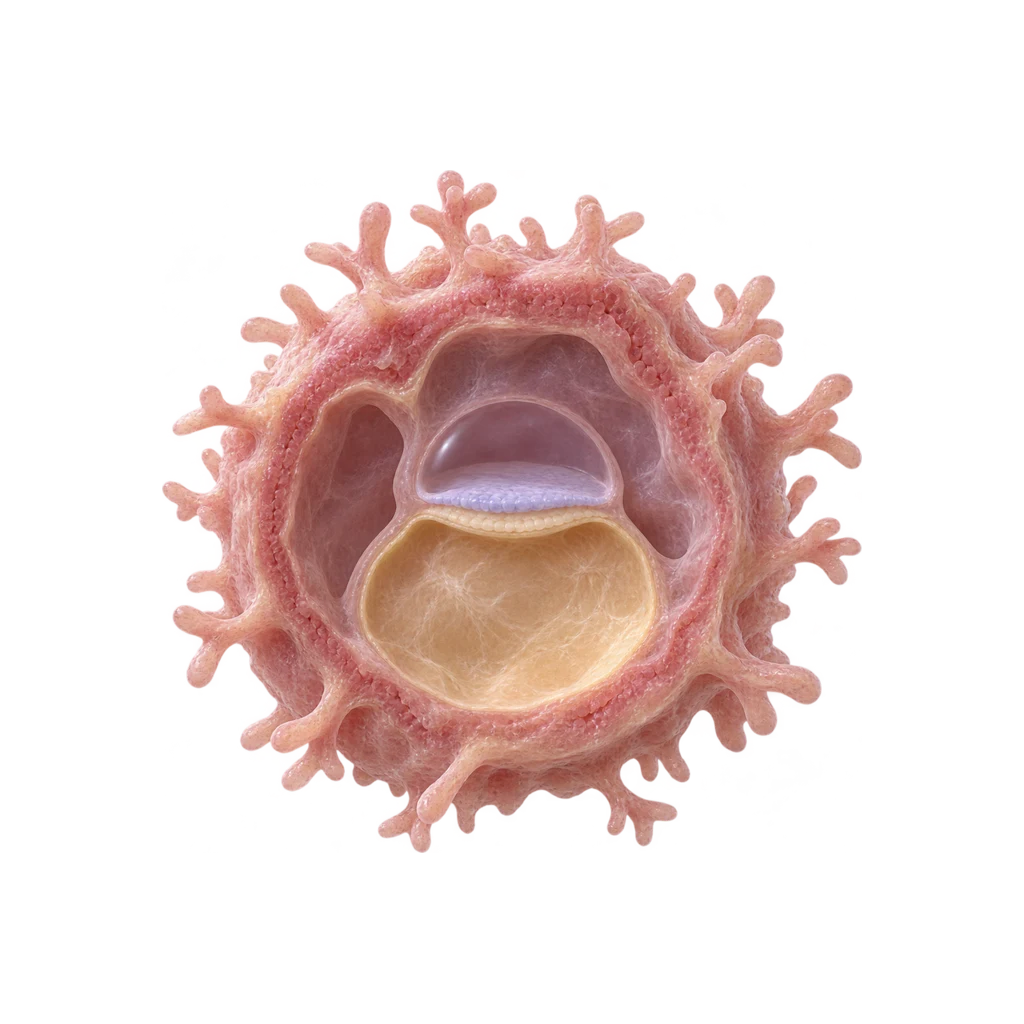

At 4 weeks pregnant, the embryo is a tiny disc of cells about 2 mm long, roughly the size of a poppy seed, and it has just implanted in the womb.
Your baby this week
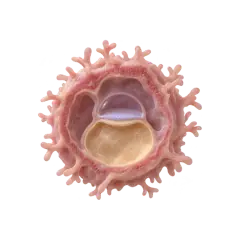
- Now safely implanted, the embryo is a flat disc of cells, with the amniotic cavity on one side and the yolk sac on the other.
- Cells begin to organise into layers that will become every organ: skin and nerves, muscle, bone and heart, and the gut and lungs.
- Early placenta tissue (the chorionic villi) is tapping into your blood supply.
Your body this week
- For a 28-day cycle, your period is due at the start of this week. A home test is usually positive from the day it is missed.
- hCG roughly doubles every 2–3 days in early pregnancy. It can cause tiredness, sore breasts and needing to pee more often.
- Some people feel nothing at all yet. That is completely normal.
- Typical weight gain so far
- 0.1–0.5 kg
- Your uterus
- About the size of a pear (unchanged to the eye)
Weight gain range is for a pre-pregnancy BMI of 18.5–24.9 (IOM guideline). Your provider may advise differently.
Can you trust a positive test at 4 weeks?
A positive result is almost certainly correct. Most home tests are reliable from the first day of a missed period, which is around now, and some very sensitive ones can work a little earlier.
A negative result is less reliable, because it may simply be too early. If you still think you’re pregnant, wait a few days and test again. See a doctor if a second test is negative and your period still hasn’t come.
What to do first at 4 weeks
Contact a midwife or doctor to start your care. You usually won’t be seen straight away, as the first full appointment in the UK is usually between 8 and 12 weeks. See your doctor sooner if you take regular medicine or have a long-term condition.
Start taking 400 micrograms of folic acid a day if you haven’t already, and keep going until at least week 12. A higher dose is prescribed for some people, so ask if you’re unsure. Vitamin D is also advised. Avoid supplements containing vitamin A (retinol).
If you drank, used cannabis or took medicine before you knew
This happens a lot. The NHS advises not drinking at all once you know you’re pregnant, but says the risk from drinking before you knew is likely to be low and you shouldn’t worry unnecessarily. Just avoid alcohol from now on, and mention it to your midwife if it’s on your mind.
Don’t stop a prescribed medicine on your own, because that could be harmful too. Check with a pharmacist, midwife or doctor before taking any medicine, including painkillers. See what’s known about common medicines.
If you used cannabis once before you knew, the NHS says to try not to worry, because it’s unlikely to have affected your baby. The CDC recommends not using it in pregnancy, so avoid it from now on and tell your midwife or doctor.
What you might feel at 4 weeks
You might notice sore breasts, tiredness, nausea, a metallic taste, bloating or needing to pee more often. Light spotting and mild cramps can also happen around now. You might also feel nothing at all, which is common.
Get urgent care for strong pain on one side of your belly, pain at the tip of your shoulder, or feeling faint. These can be signs of an ectopic pregnancy, and symptoms usually develop between weeks 4 and 12.
Scans, tests and checkups
-
This weekHome pregnancy test Self-care
Detects hCG in urine. Most reliable from the first day of a missed period.
-
From week 6First prenatal visit & bloodwork Checkup
Health history, blood pressure, urine, blood type and Rh factor, blood count, and infection screening (hepatitis B, HIV, syphilis, rubella immunity). The UK aims to see you by 10 weeks.
-
From week 6Early / dating ultrasound Ultrasound
Confirms the pregnancy is in the uterus, sees the heartbeat, counts babies and dates the pregnancy. Often part of the first visit or combined with the 12-week scan.
Real size, next to an adult hand
Growth curve
When to call your midwife or doctor at 4 weeks
Call your midwife, doctor or maternity unit straight away, day or night, if you have any of these:
- Vaginal bleeding, with or without cramps.
- Strong pain low on one side of your belly, pain at the tip of your shoulder, or feeling faint. These can be signs of an ectopic pregnancy, which needs urgent care.
- Being sick so often that you can’t keep fluids down for a day.
- Fever of 38 °C (100.4 °F) or higher, or pain or burning when you pee.
- Pain or swelling in one leg, chest pain, or sudden shortness of breath. These can be signs of a blood clot.
- Feeling very low, hopeless or anxious most days. If you feel you might harm yourself, get emergency help.
Based on NHS and ACOG guidance. This list isn’t complete. If something feels wrong, call anyway. In an emergency, call your local emergency number.
Tip for this week
Contact a midwife or doctor to arrange your first appointment. In the UK it is usually between 8 and 12 weeks. In the US the first visit is often around 8–10 weeks.
Myth or fact?
Does having no pregnancy symptoms mean something is wrong?
MythNo. Many people have healthy pregnancies with few or no symptoms, especially early on.
Read the evidenceCommon questions at this stage
Questions people ask about week 4
How accurate is a pregnancy test at 4 weeks?
Many home tests claim over 99% accuracy from the day your period is due. In practice, some pregnancies aren’t detected until a few days later. If the test is negative and your period still hasn’t come, test again in 2–3 days.
How big is the baby at 4 weeks?
About 2 mm, roughly the size of a poppy seed. It is a flat disc of cells rather than a recognisable shape.
References
- NHS Best Start in Life: 4 weeks pregnant
- NHS: Doing a pregnancy test
- NHS: Finding out you’re pregnant
- NHS: Vitamins, supplements and nutrition in pregnancy
- NHS: Drinking alcohol while pregnant
- NHS: Medicines in pregnancy
- NHS: Ectopic pregnancy
- NHS: Illegal drugs in pregnancy
- CDC: Cannabis and pregnancy
- NHS: Your antenatal appointments
- NHS: Miscarriage
- NHS: Vomiting and morning sickness
- MedlinePlus (US National Library of Medicine): Fetal development
Advice differs between countries, so follow your own care team’s plan. Weights from week 20 are the WHO median, and earlier weights are approximate. How we check this.
All 40 weeks
First trimester Weeks 1–13
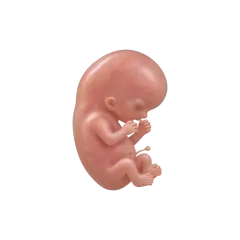
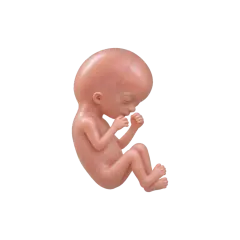
From conception to a fully formed, tiny fetus. The most rapid change of the whole pregnancy.
Second trimester Weeks 14–27
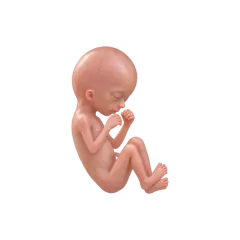
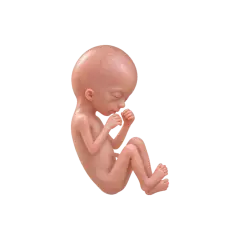
Growth, movement and senses. Often the most comfortable stretch for parents.








Third trimester Weeks 28–40
Weight gain, brain and lung maturation, and getting into position for birth.